
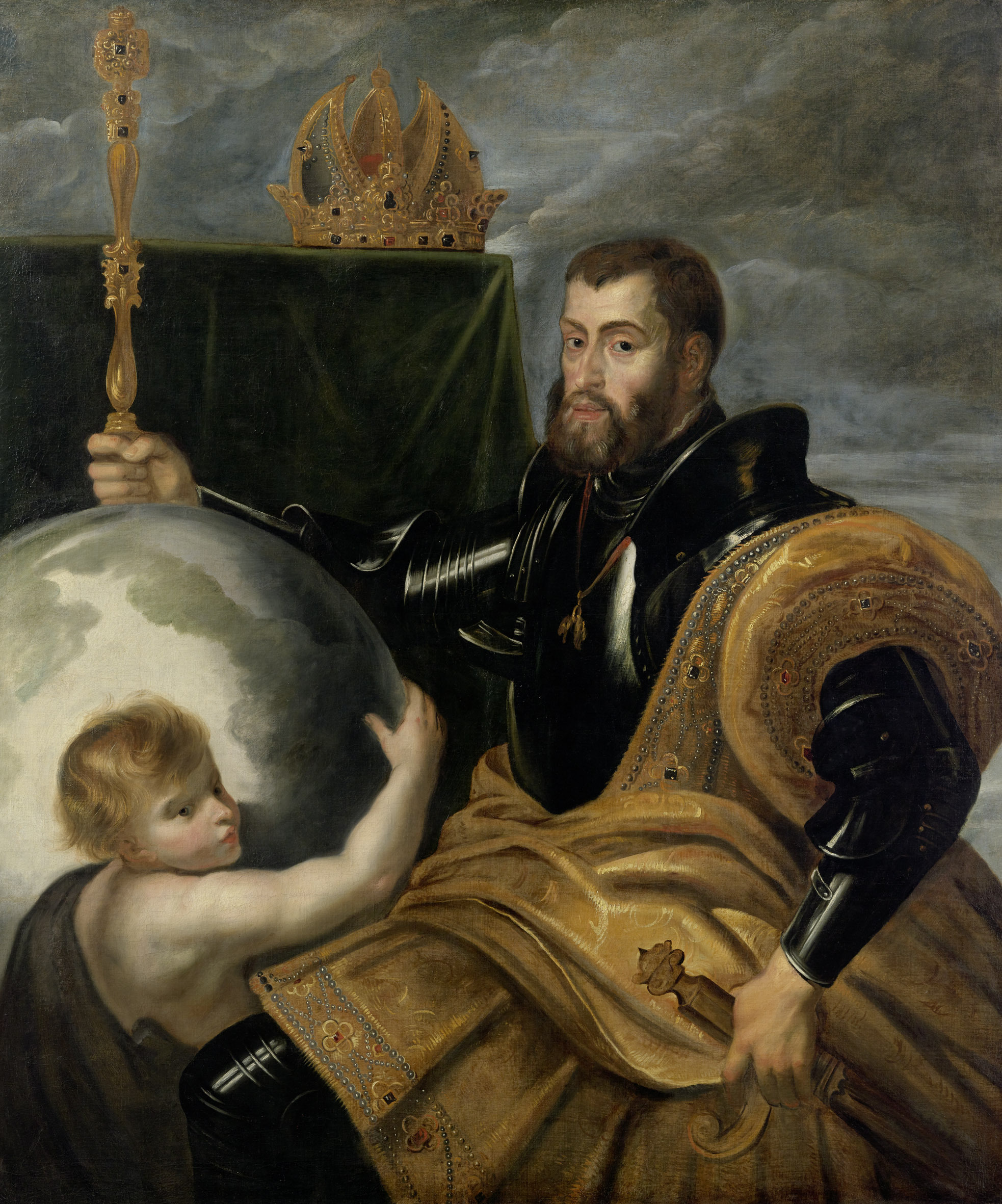
Motivated by rivalry with Portugal near the end of the 15th century, the Spanish monarchy began sending explorers westward across the Atlantic to discover trade routes and expand Spain’s power and influence. After Christopher Columbus landed in what is now the Caribbean and claimed the region for Spain, tensions between Spain and Portugal intensified. To prevent further escalation and possible war between the two major European powers, Pope Alexander VI issued the 1494 Treaty of Tordesillas. This treaty, signed by both nations, drew a line in the Atlantic Ocean from the North Pole to the South Pole. It stated that Spain would have the right to rule over any lands discovered to the west of the demarcation line, while Portugal would have the right to rule over any lands found to the east. The only exception to each country’s right to control new territories was if a Christian ruler already governed the area.
Columbus’s arrival in the Americas in 1492 marked the beginning of the Golden Age of Spain. In the centuries that followed, the Spanish Empire grew to become one of the largest in history. At its height, it covered over five million square miles with settlements on nearly every continent. The empire lasted almost 500 years, with the last Spanish territory of Equatorial Guinea gaining independence in 1968.
The purpose and methods of establishing Spanish footholds varied by region and over time, but they also shared many similarities. In this lesson, students will infer the purpose and means of Spain’s expansion from primary documents written by monarchs, conquistadores, clerics, and others as they chronicle the rise and fall of the Spanish Empire.