Alamo Archaeology Church Preservation - November 14

November 14, 2025

Archaeological investigations continued for the Church Preservation Project. Archaeologists worked in EUs 23, 24, 131, 138, and opened EU-133.  

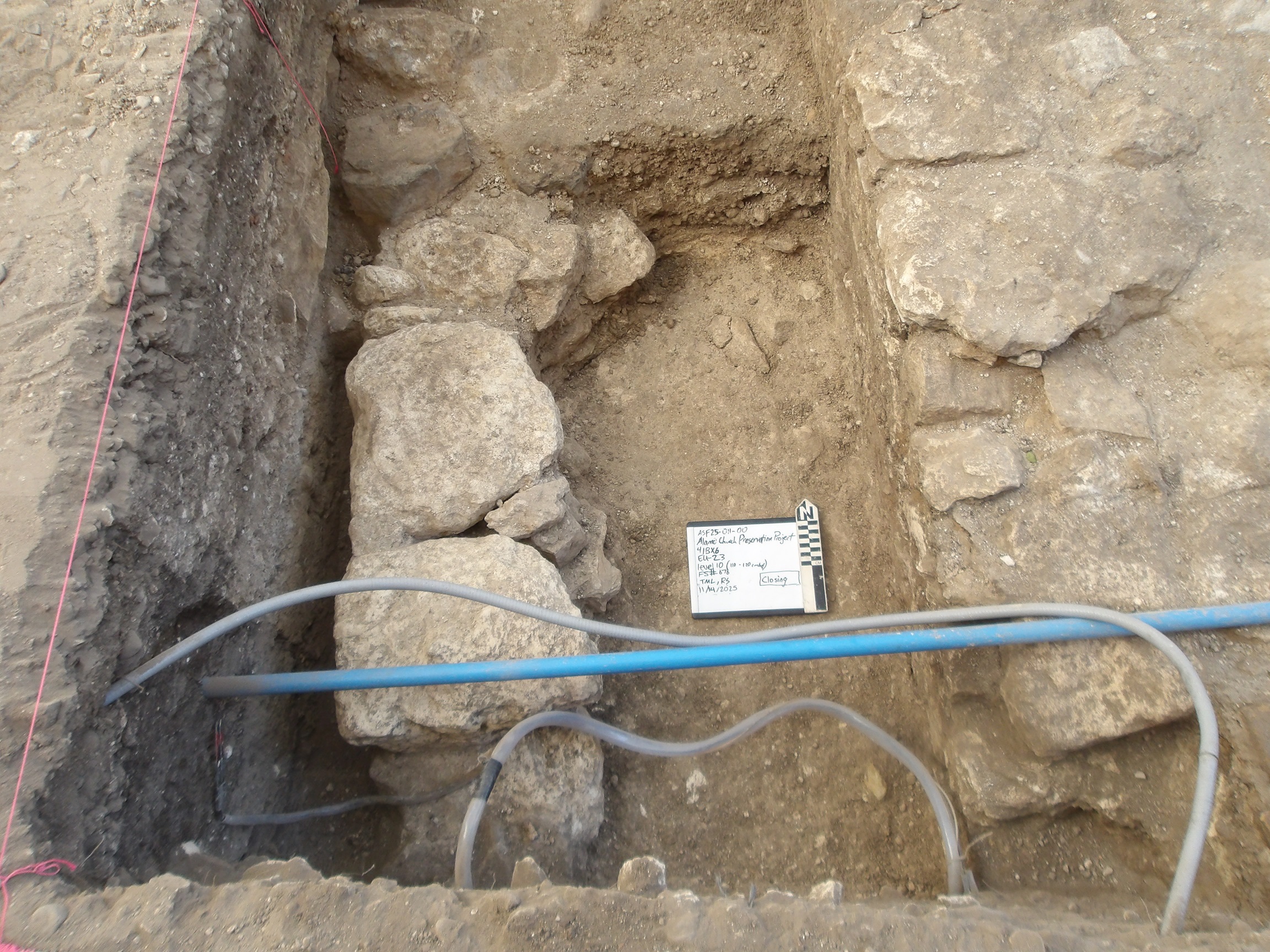
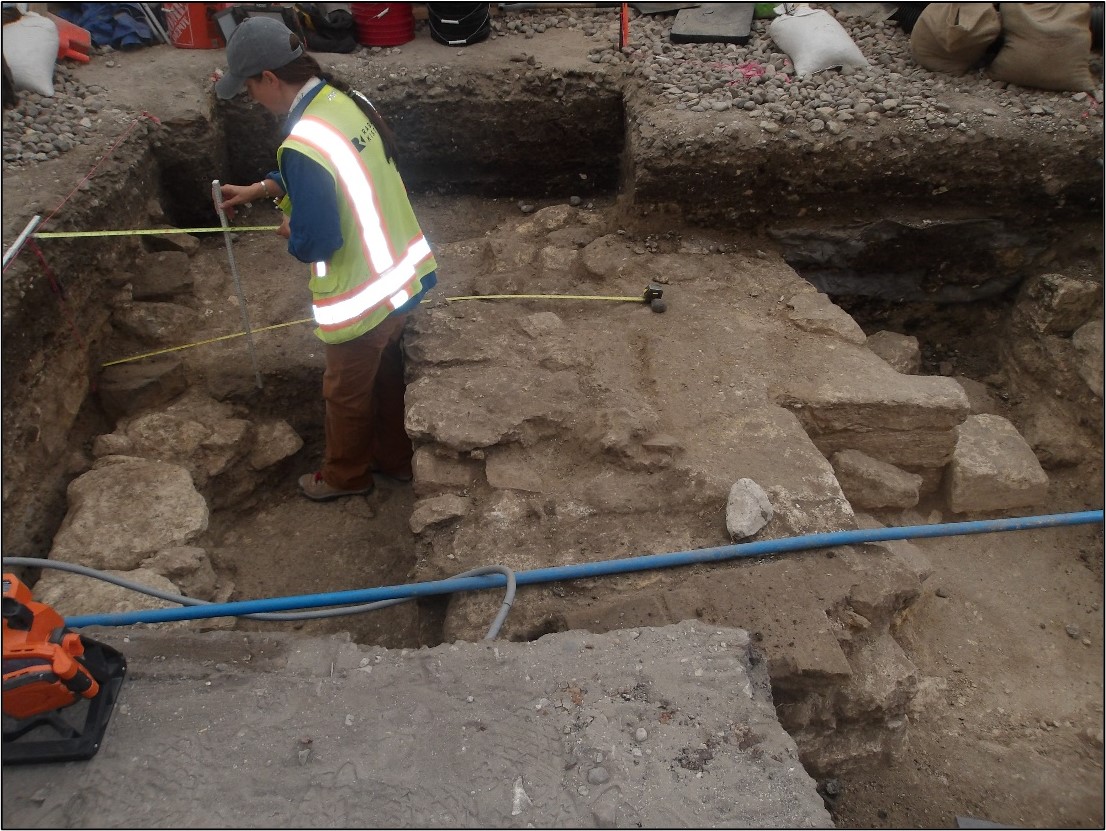
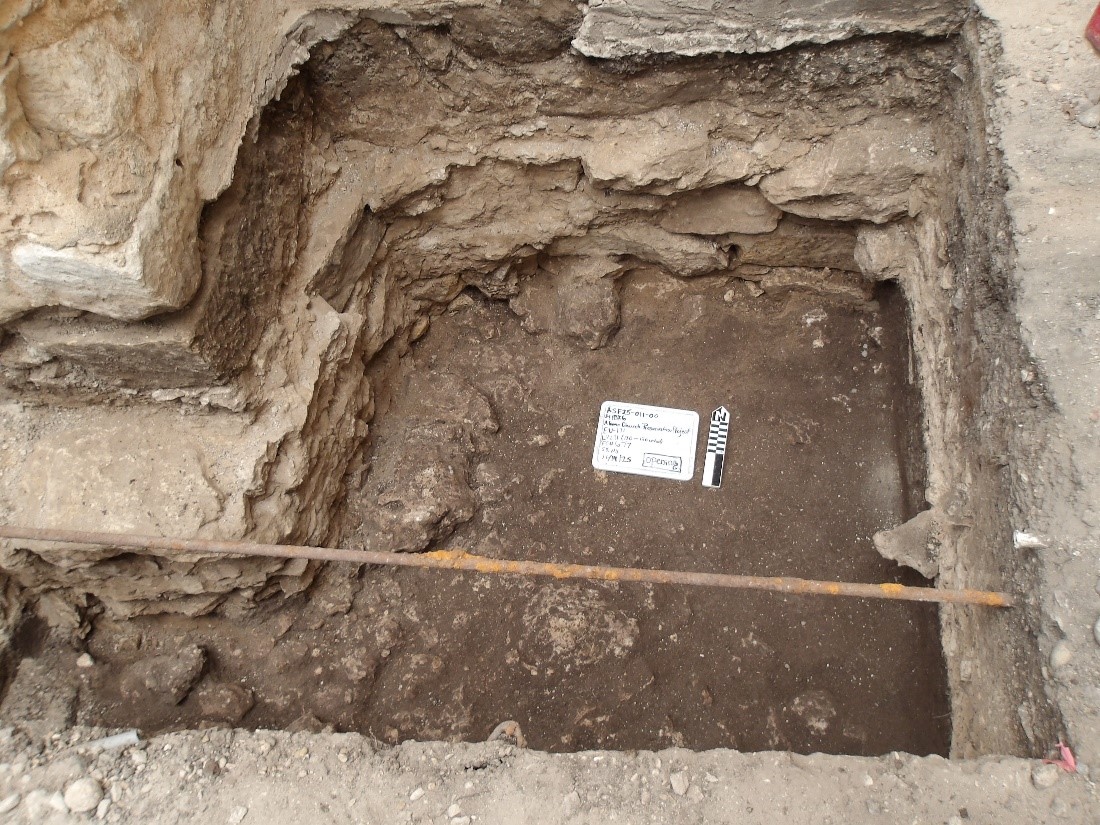
Three excavation units on the north side of the Church were active last week. EUs 23, 24, and 27 are adjacent units and have similar depositional history. All three units contained a portion of the limestone feature encountered in EU-20. This limestone feature extends north from the Church wall and then appears to form a corner. Very little cultural material is associated with the feature; however, a possible surface is associated with the feature. Archaeologists further documented the limestone feature in EU-24 with a map, soil profile, and geo scans.

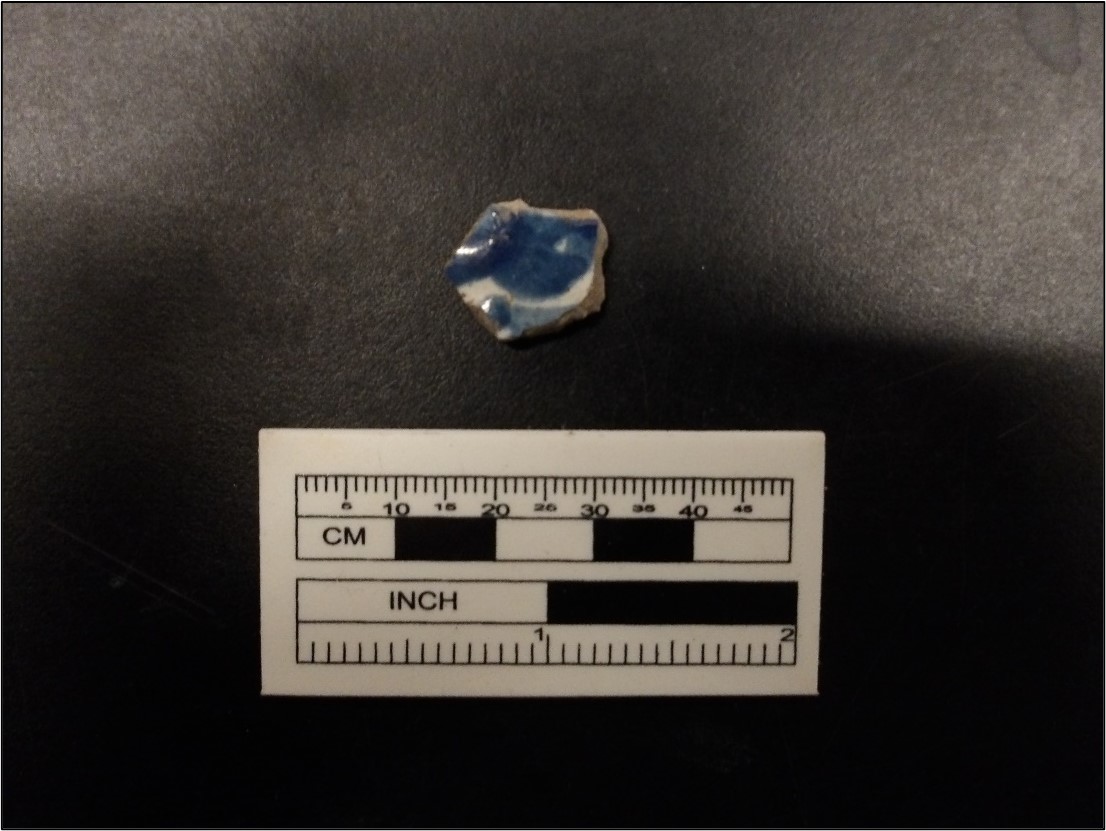
Within EU-27, archaeologists recovered a Puebla Blue on White ceramic sherd at 50 cm below surface. Puebla Blue on White are Spanish Colonial ceramic, dating from the late sixteenth century into the late eighteenth century. These are tin-glazed ceramic, known to be manufactured in Puebla, Mexico. Decoration of Puebla Blue on White consists of a white background with blue linear designs and floral motifs.
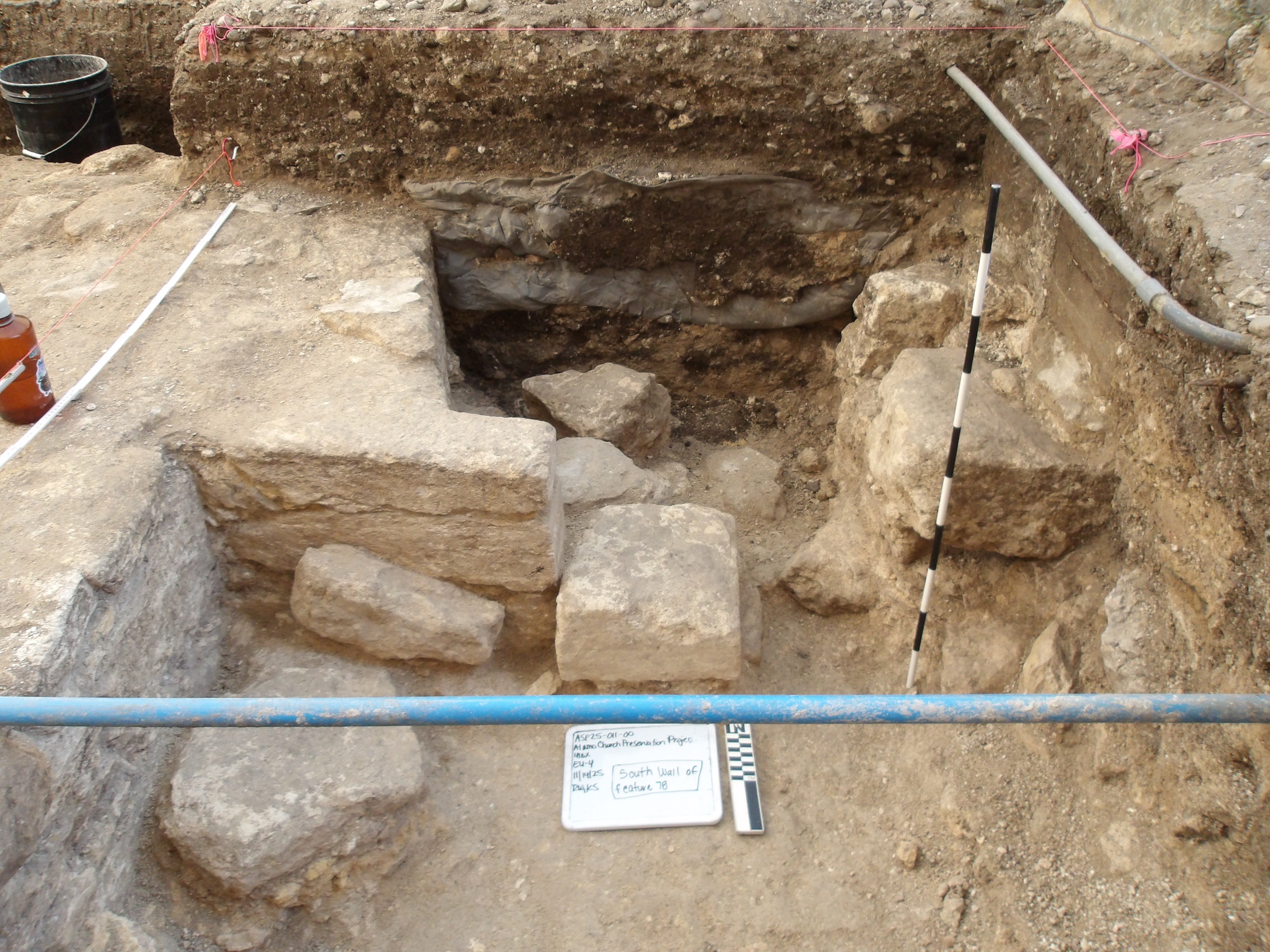
Limestone rock feature inside an excavation unit
EU-24 at approximately 80 cm below surface, photo facing north.
White ceramic sherd with puebla blue on a black background next to a ruler for size
Puebla Blue on White ceramic sherd.
Three limestone rock features at the bottom of an excavation unit
EU-23 at 100 cm below surface, photo facing north.
Archaeologist mapping limestone foundation inside an excavation unit
Archaeologist mapping limestone foundation within EUs 23, 24 and 27, photo facing north.

On the south side of the Alamo Church, archaeologists within EU-131 further exposed the original foundation stones. Limited artifacts were recovered from EU-131; however, two surfaces were encountered at varying depths. Both of which were thoroughly documented and photographed. Archaeologists reached an approximate depth of 60 cm below surface.

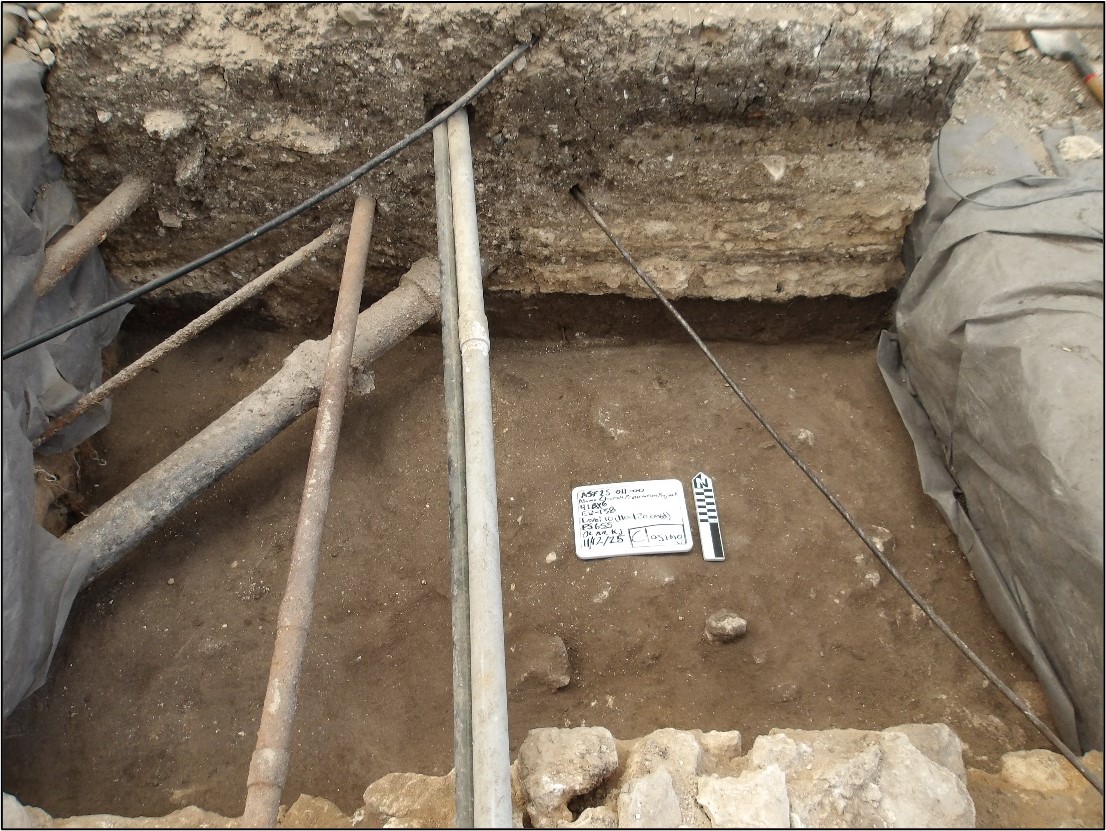
Excavations at EU-138 reached a final depth of 100 cm below surface. Archaeologists completed final unit documentation, with detailed maps and geo scans.

Two surfaces inside an excavation unit
EU-131 at approximately 60 cm below surface, photo facing north.
Crossing pipes inside an excavation unit
EU-138 at 100 cm below surface, photo facing north.

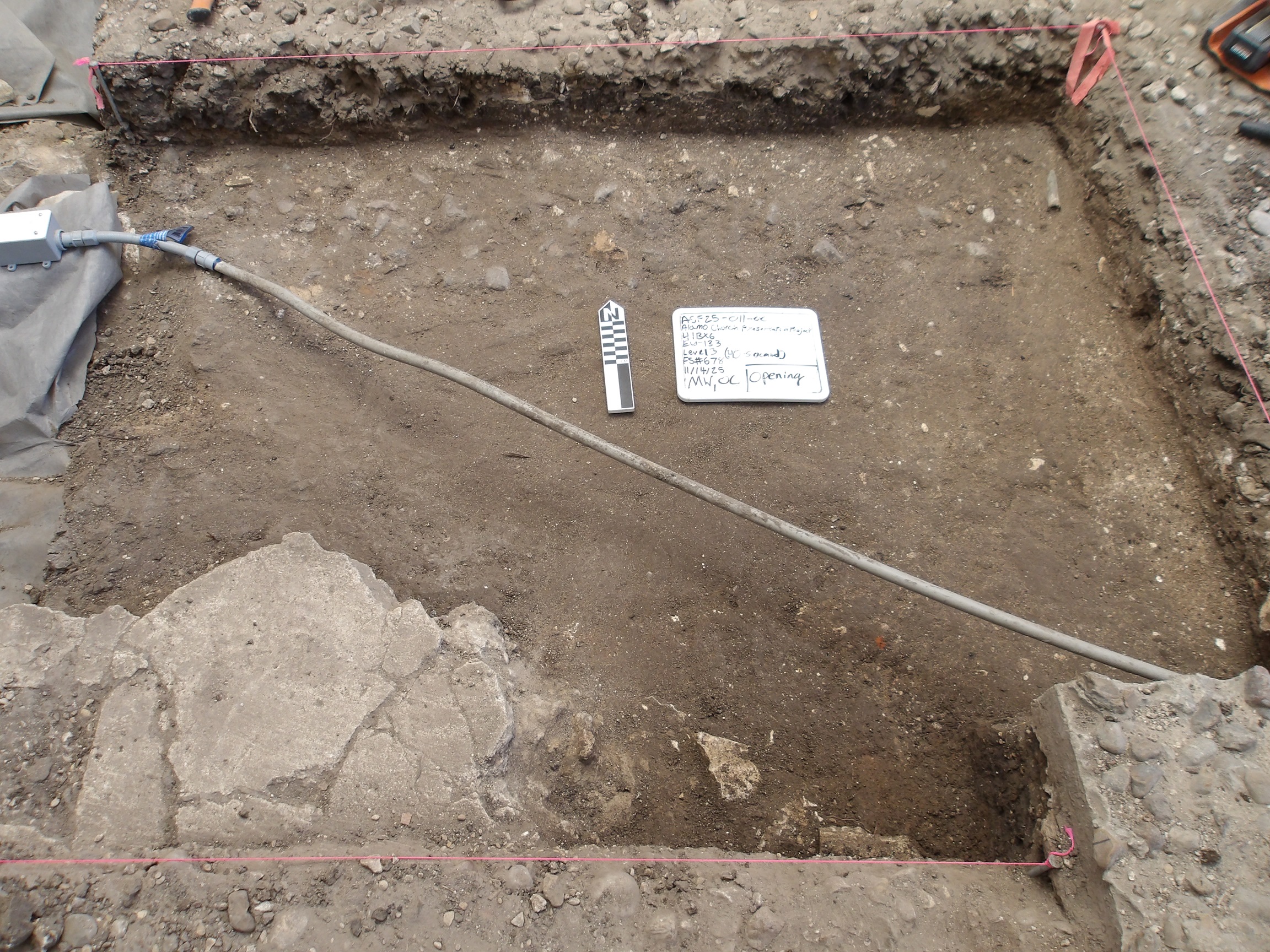
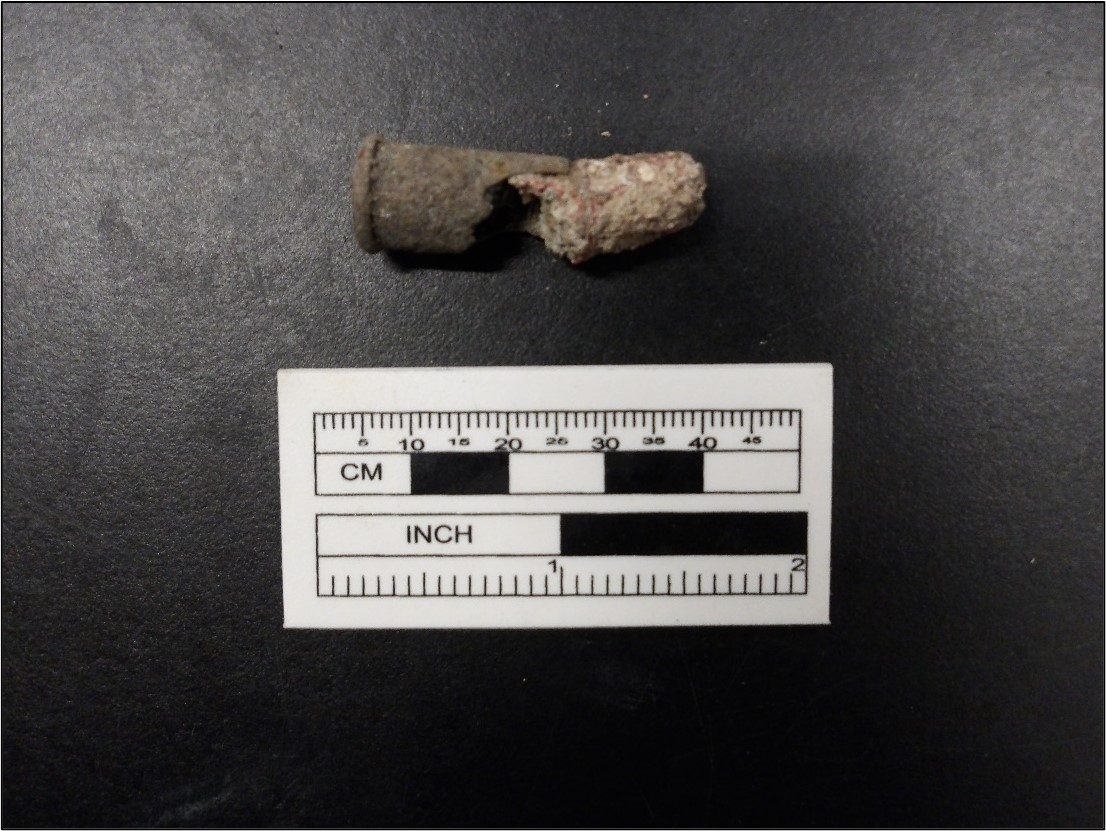
Archaeologists opened EU-133 on the south side of the Church. At approximately 20 cm below surface, archaeologists recovered a .38 caliber centerfire cartridge. These were originally manufactured by Smith & Wesson starting in 1877 and are still made today. This specific cartridge was not fired, evidenced by the intact projectile and possible gun powder remaining within the casing.

Diagonal wire across the inside of an excavation unit
EU-133 at approximately 20 cm below surface, photo facing north.
.38 caliber centerfire cartridge on a black background next to a ruler for size
.38 caliber centerfire cartridge.