Alamo Archaeology Church Preservation - January 12

January 12, 2026

Archaeologists continued investigations for the Church Preservation Project in EUs 51, 59 ,117, 118, 122, and 128.

Excavations within EU 51 started last week. This unit is within a group of units located north of the Church and near the Gift Shop. The unit started on Friday afternoon and archaeologists reached a depth of 10 cm below surface. Two old utility pipes were encountered immediately beneath the surface.

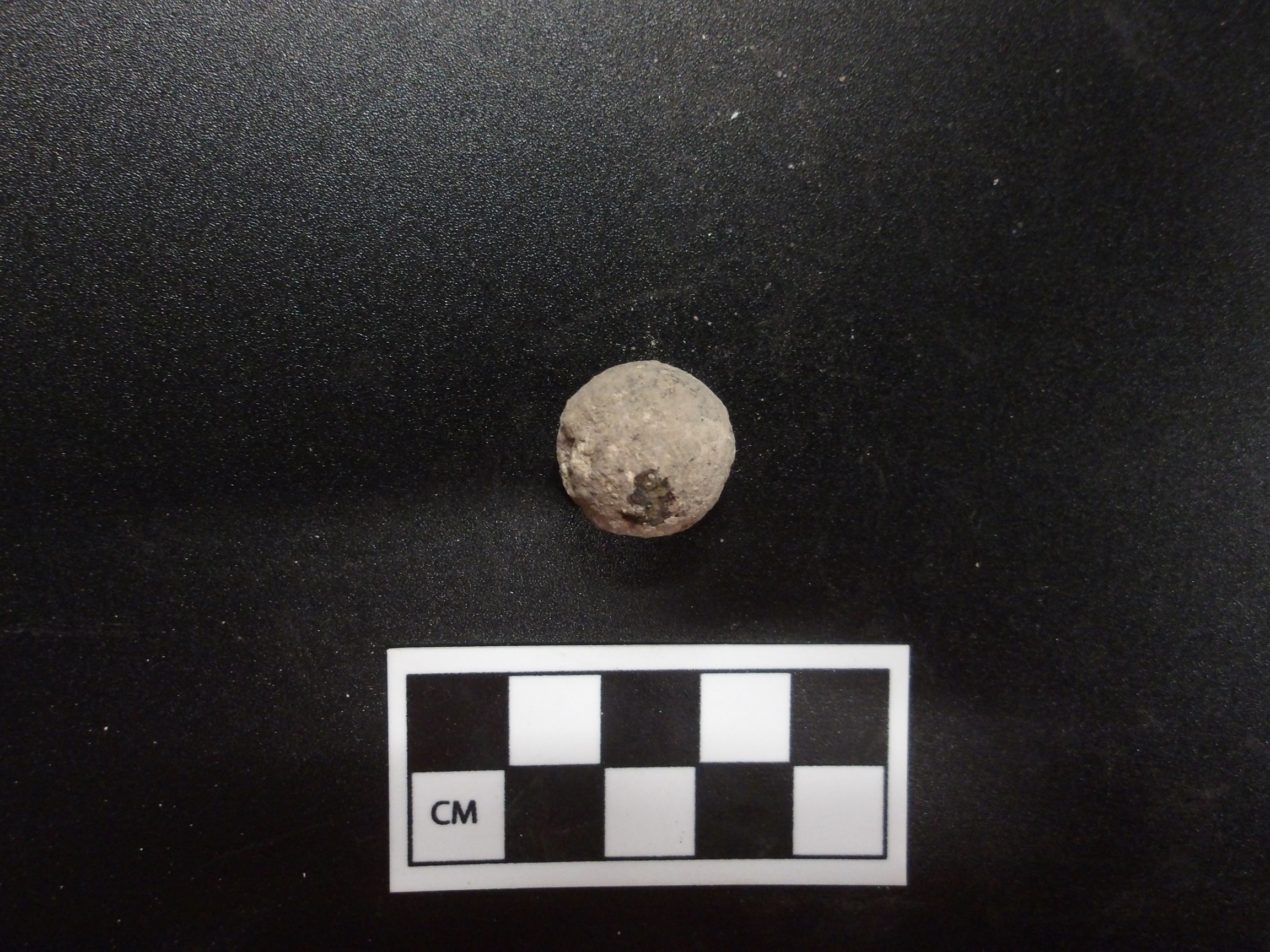
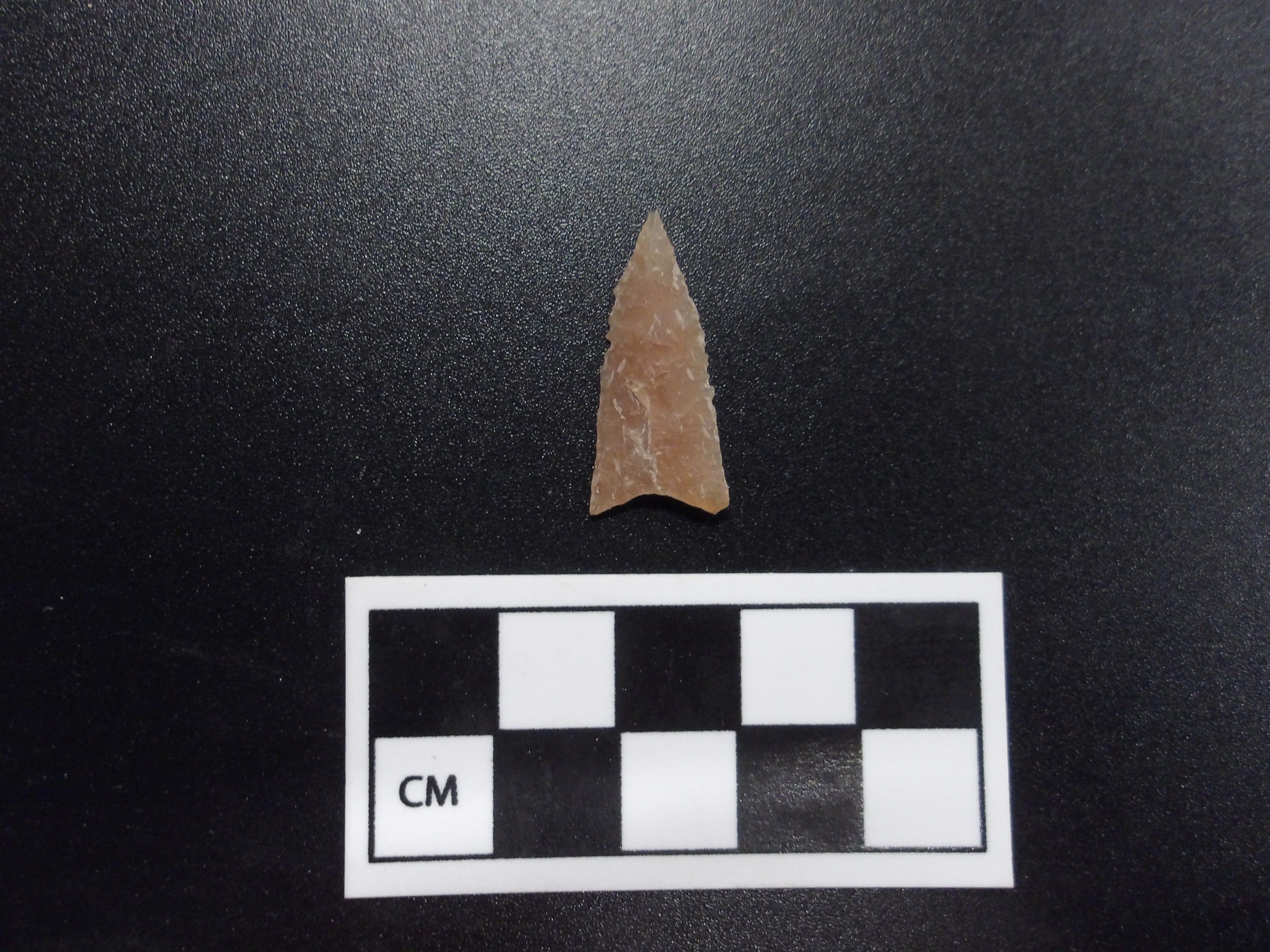
Archaeologists also began excavations within EU-59 against the Church wall last week. This unit is located on the north side of the Church, immediately to the east of the exit door. Archaeologists excavated a depth of 90 cm below surface by the end of the week. While no features were encountered, several artifacts were recovered from this unit including Spanish Colonial ceramics, ammunition, metal, glass, and a Guerrero projectile point.
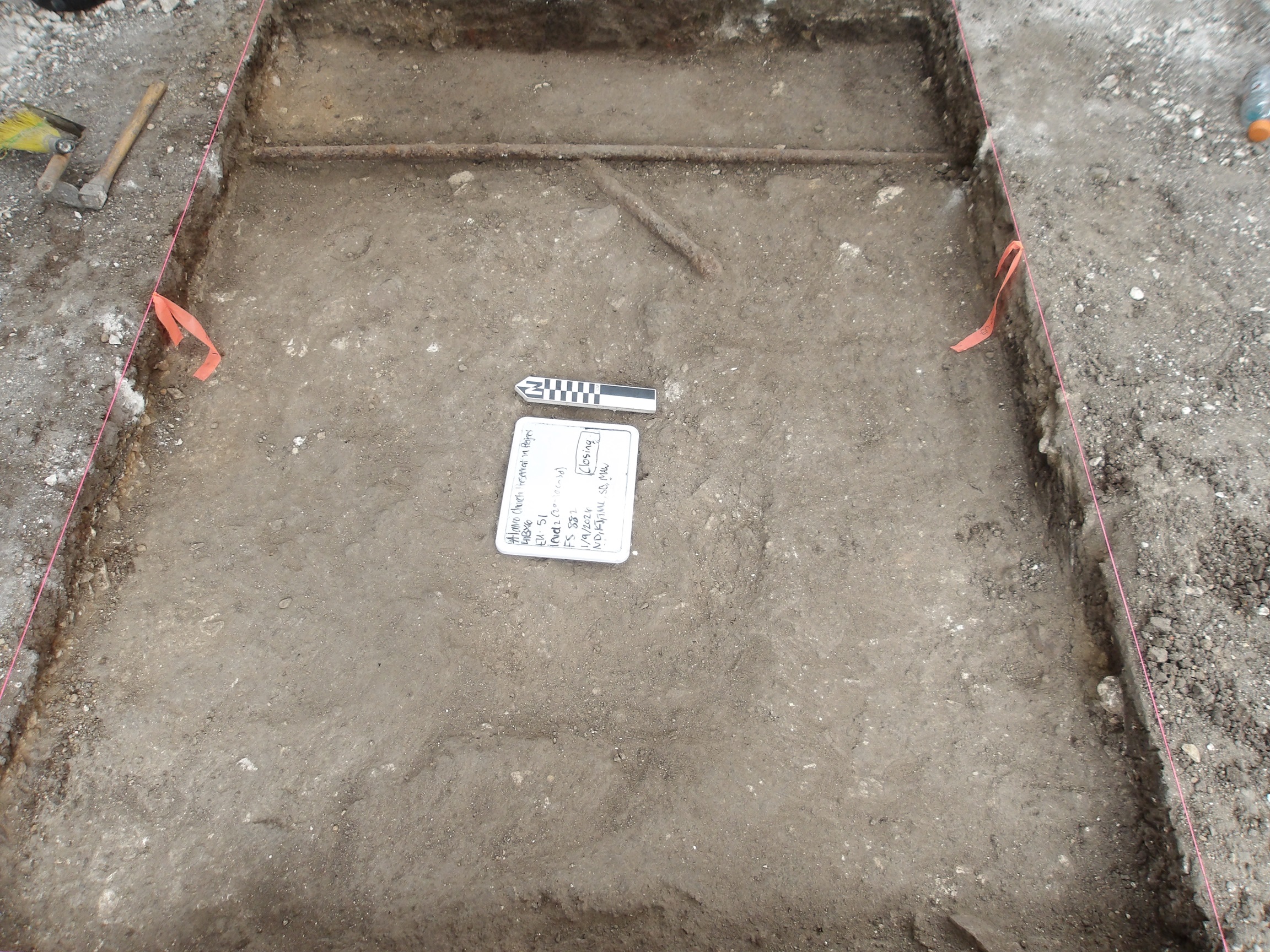
Two utility pipes inside an excavation unit
EU-51 at 10 cm below surface, photo facing east.
Guerrero point on a black background next to a ruler for size
Guerrero Point from EU-59.
Utility pipe across an excavation unit
EU-59 excavations at 90 cm below surface, photo facing south.
Musket ball on a black background next to a ruler for size
Musket ball from EU-59.

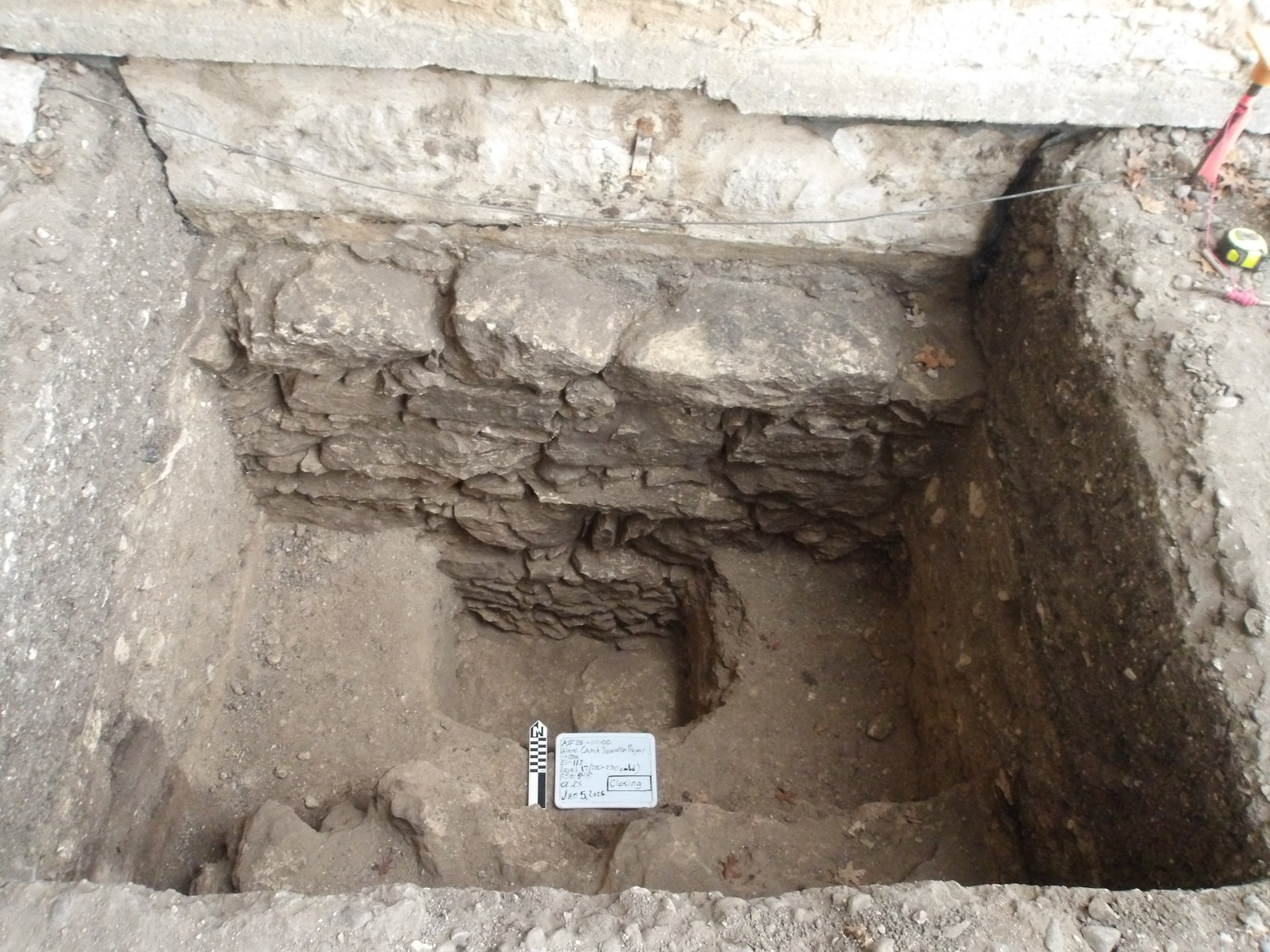
Archaeologists completed excavations at the terminal depth of 150 cm below surface within EU-117. At the completion of excavations, final documentation was also completed. This included soil profile maps and descriptions, multiple digital scans and photos, and GPS points.

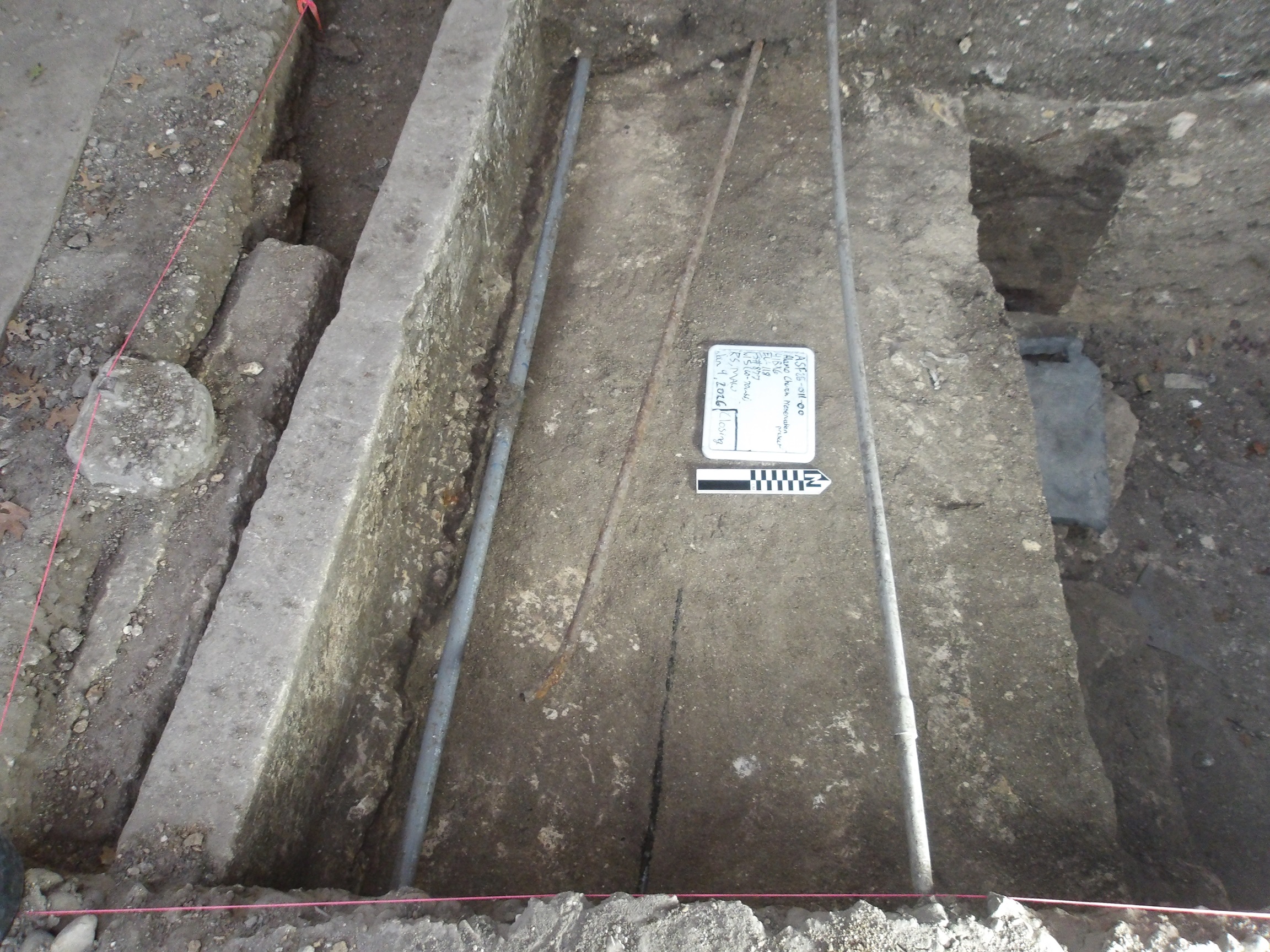
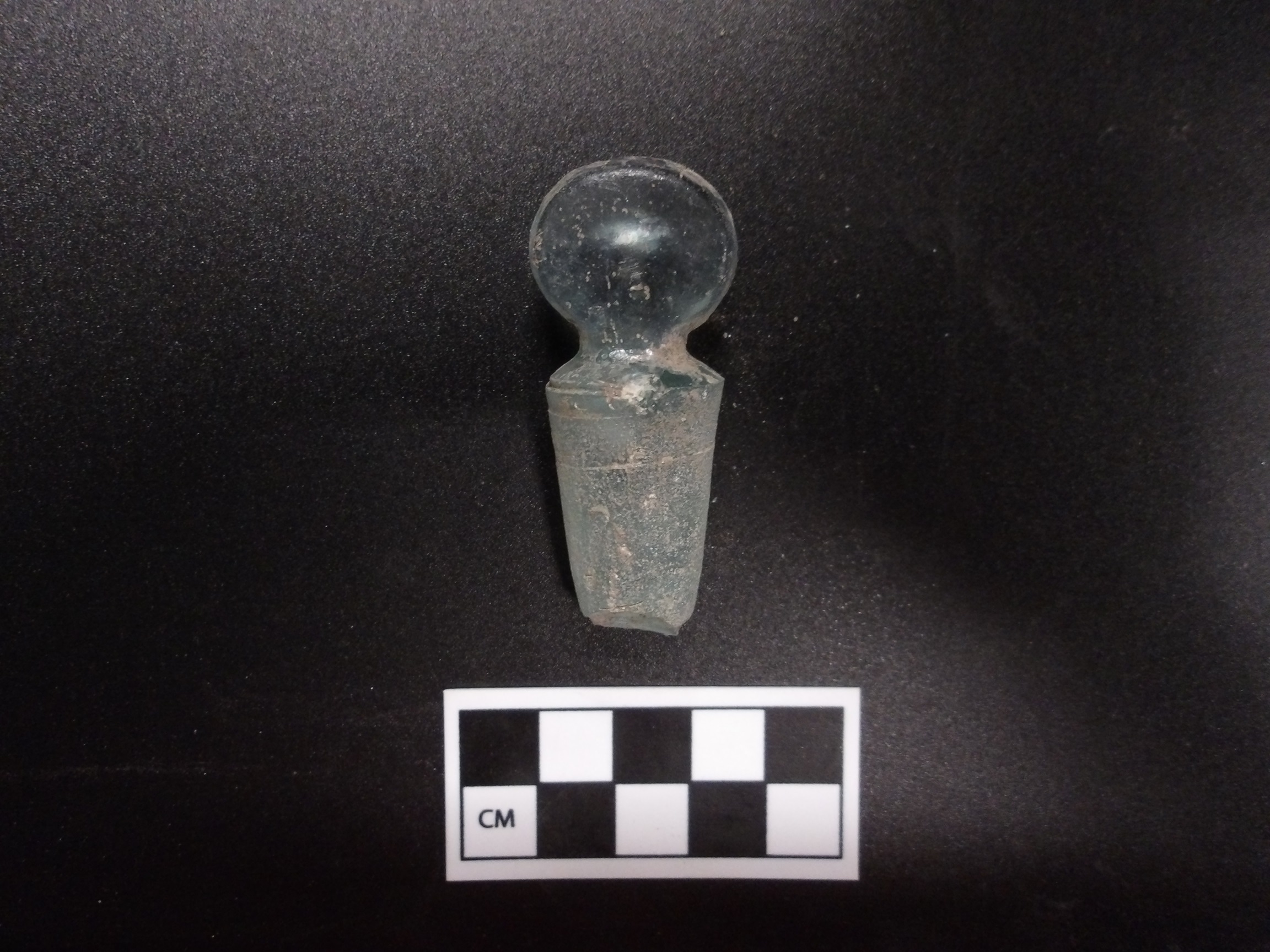
Excavations in EU-118 reached a depth of 50 cm below surface. Archaeologists encountered numerous utilities and mixed soil deposits. While no significant artifacts were recovered from the unit, a glass bottle stopper was found. Excavations were paused when a concrete curb and slab were encountered along the southern extent of the unit.

Interior of limestone excavation unit 150 cm below surface
EU-117 at 150 cm below surface, facing north.
Utilities and soil deposits inside an excavation unit
EU-118 excavations at 40 cm below surface, facing west.
Glass bottle stopper on a black background next to a ruler for size
Glass bottle stopper from EU-118.

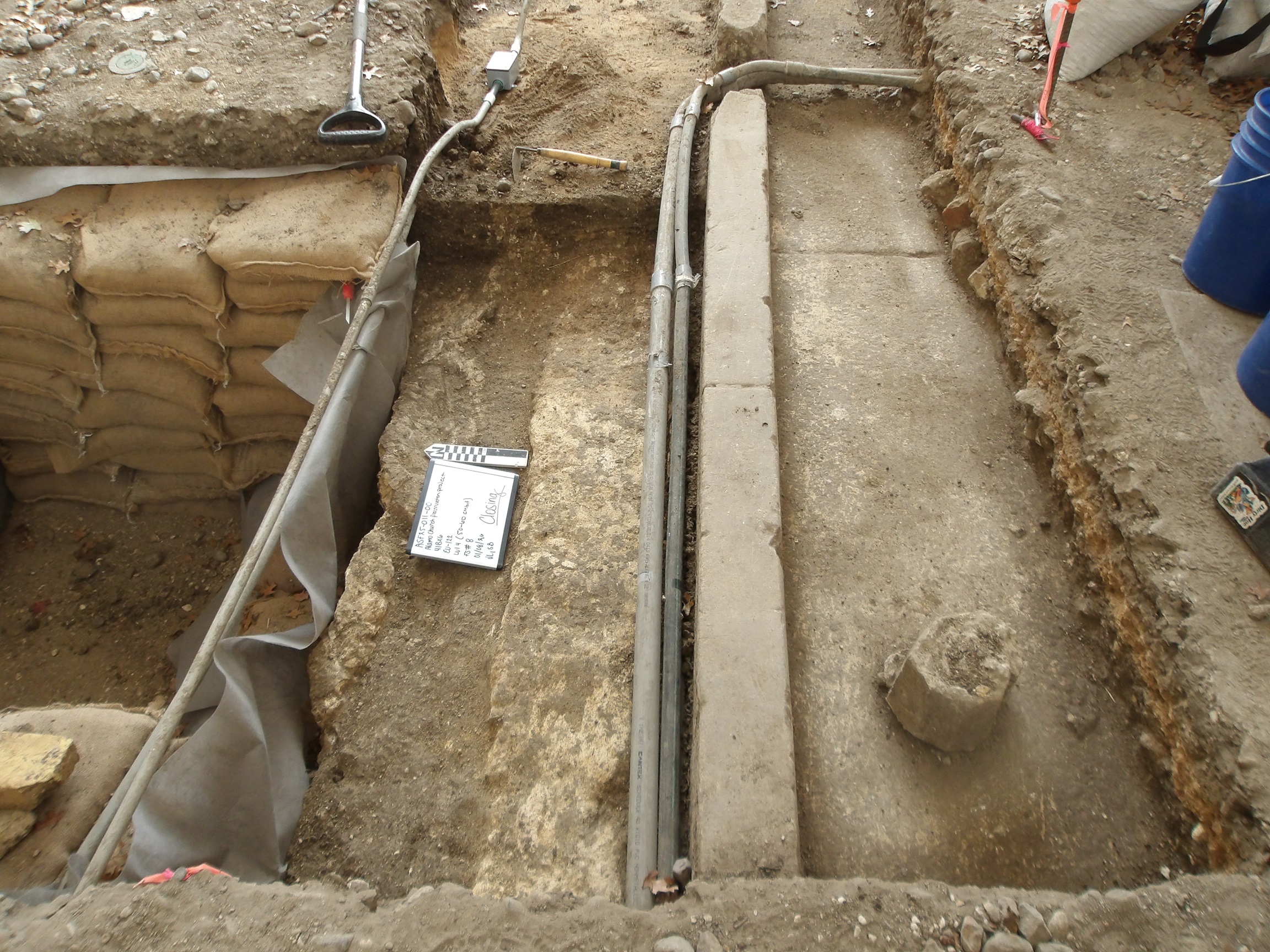
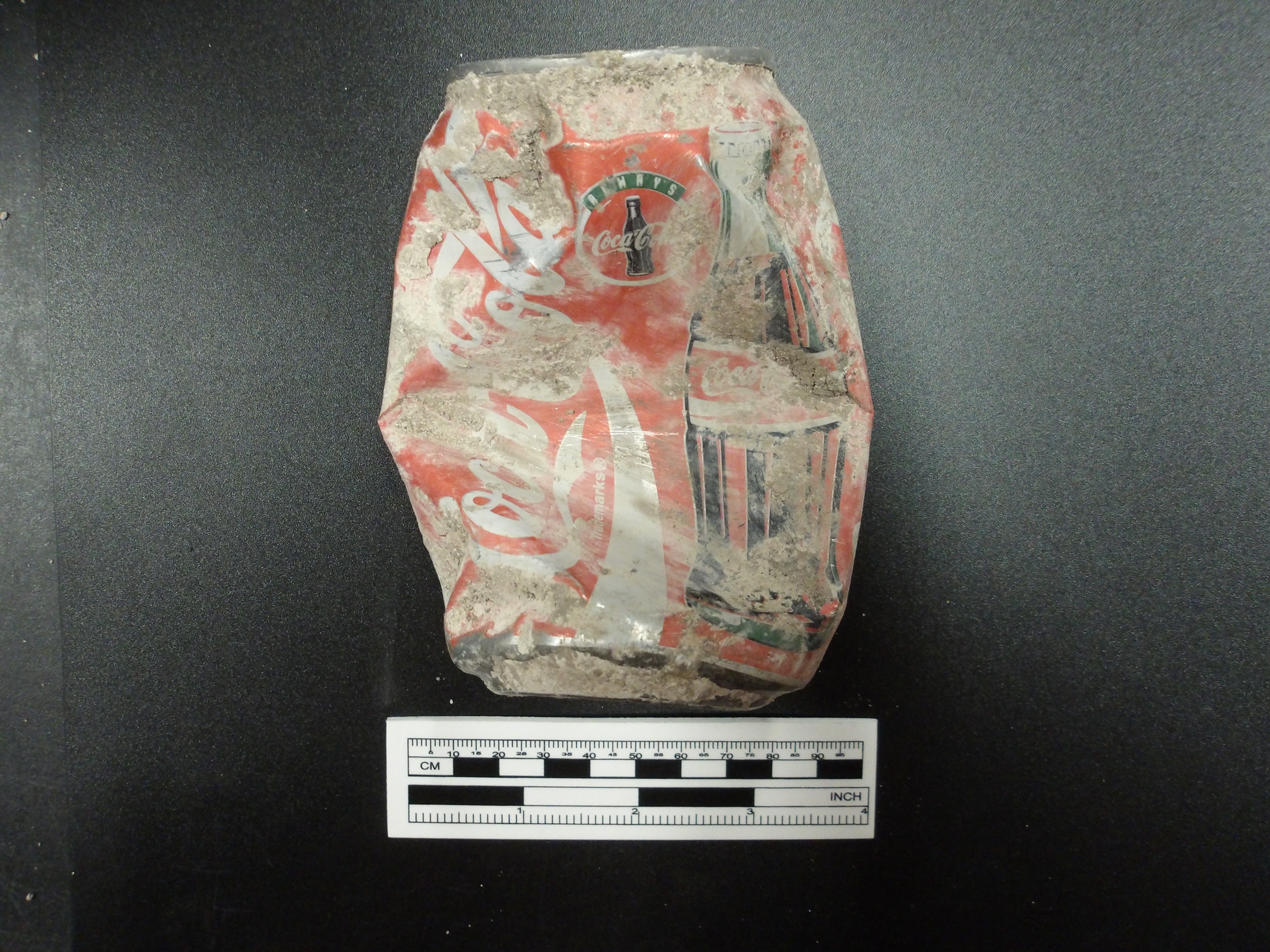
In EU-122, excavations reached a depth of 40 cm below surface, where archaeologists encountered the same concrete curb and slab seen in adjacent units. A compacted caliche surface was also seen north of the curb, but it was previously impacted by a utility which left a narrow trench. All of the soil deposits represent modern disturbances, as evidenced by the Coca-Cola can recovered from the unit. Preliminary research indicates the can is from 1994.

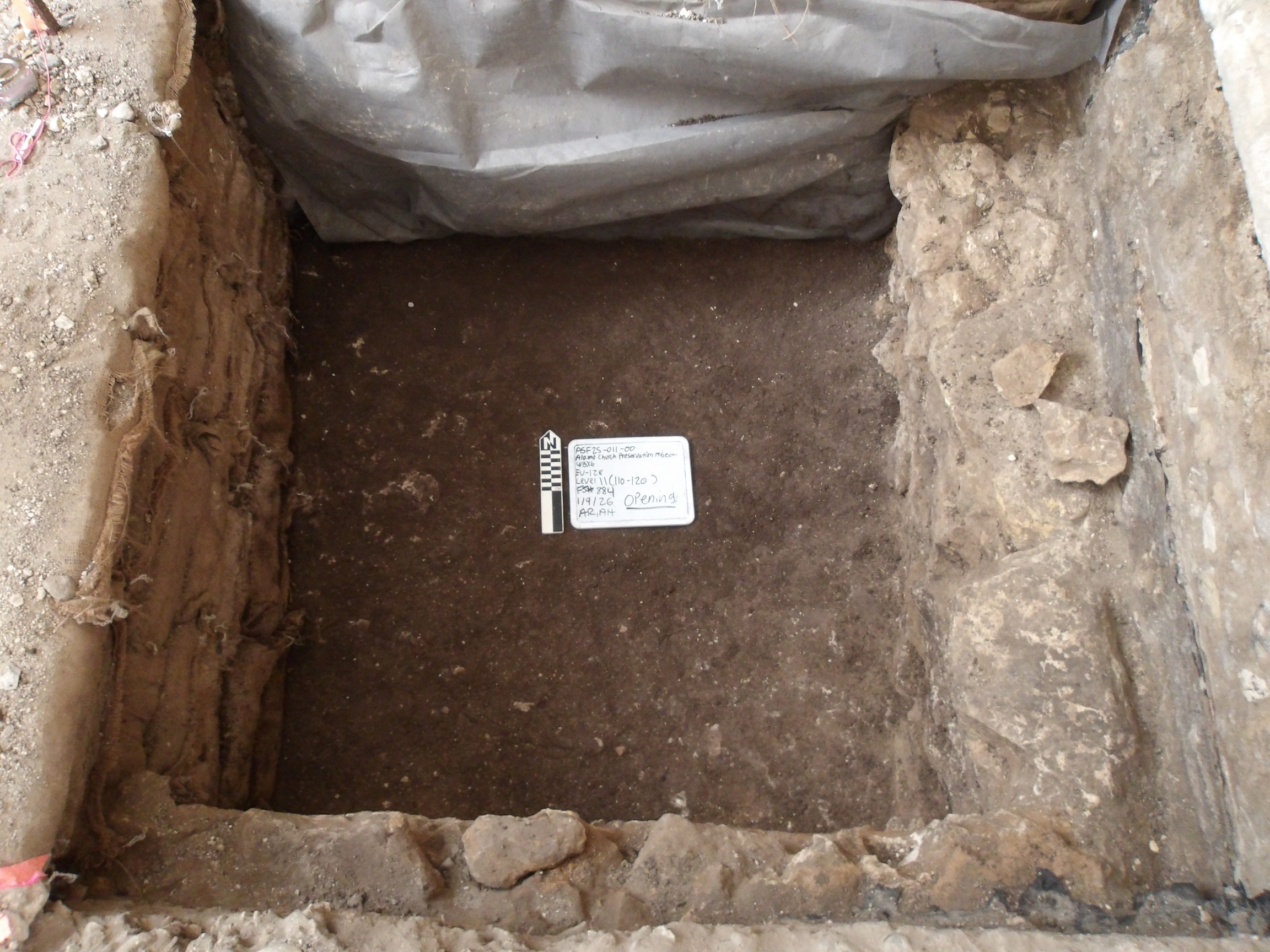
Archaeologists continued excavations in EU-128 and reached a depth of 100 cm below surface. The police substation wall foundation identified in previously excavated units continues within EU-128. Archaeologists are also beginning to encounter pockets of the natural caliche hardpan at the base of the unit. This is surprising because adjacent units did not encounter the caliche hardpan until much deeper.

Concrete curb and slab inside an excavation unit
EU-122 at 40 cm below surface, facing east.
1994 Coca-Cola can recovered from an excavation unit in 2026
1994 Coca-Cola can from EU-122.
Natural caliche hardpan at base of excavation unit
EU 128 at 100 cm below surface, facing north.