Alamo Archaeology Church Preservation - December 19

December 19, 2025

Archaeologists continued investigations for the Church Preservation Project in EUs 18, 117, 121, and 127. EU-18 is located on the northside of the Alamo church, and EUs 117, 121, and 127 are all located on the south side of the church.   

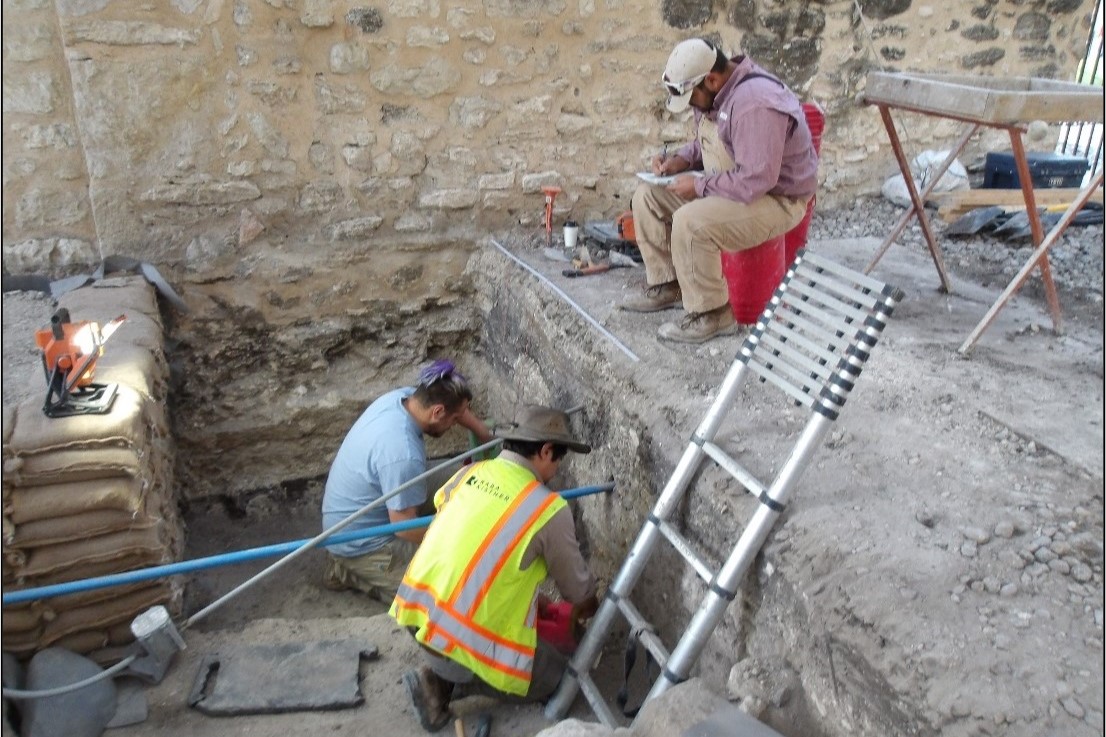
EU-18 is nearly complete with excavations. During excavations, archaeologists encountered a limestone alignment within the west profile wall, and two post holes at approximately 110 cm below surface. The post holes are likely related to the scaffolding used during the construction of the Church. Archaeologists will further document these features with detailed feature descriptions, maps, photographs, and geo points. 
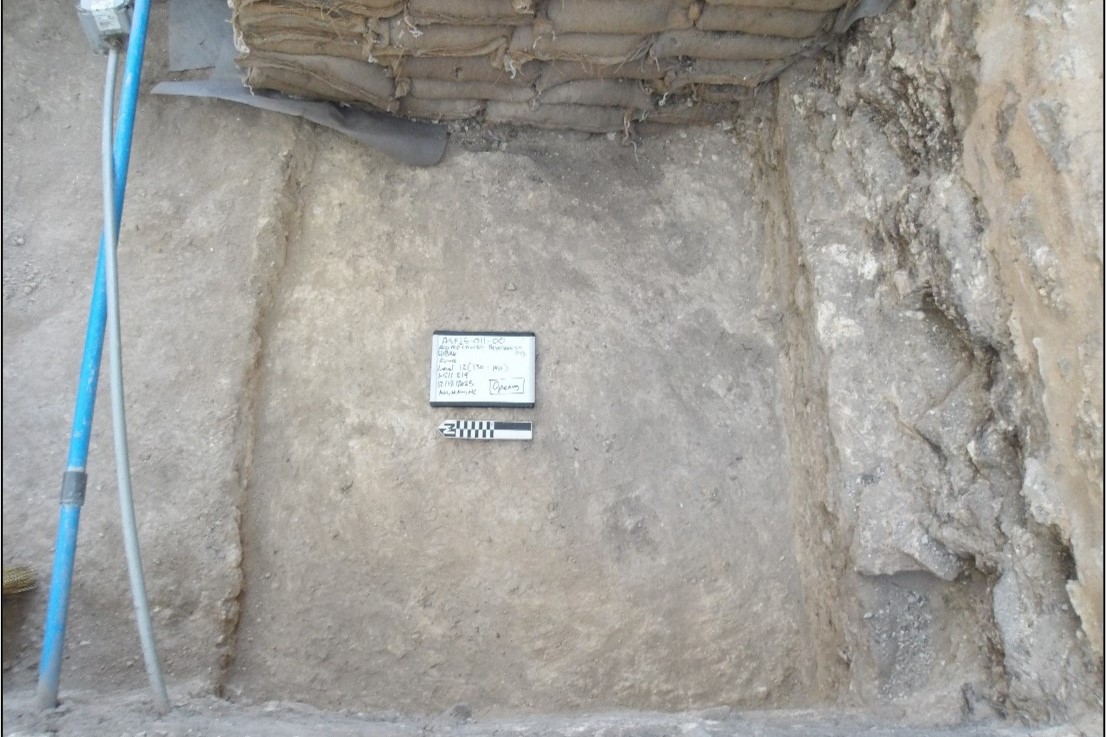
Blue pipe and sandbags inside an excavation unit
EU-18 at 110 cm below surface, facing east.
Two archaeologists inside excavation unit and one at the top with a ladder for exit
Archaeologists mapping limestone alignment in EU-18, facing southwest.
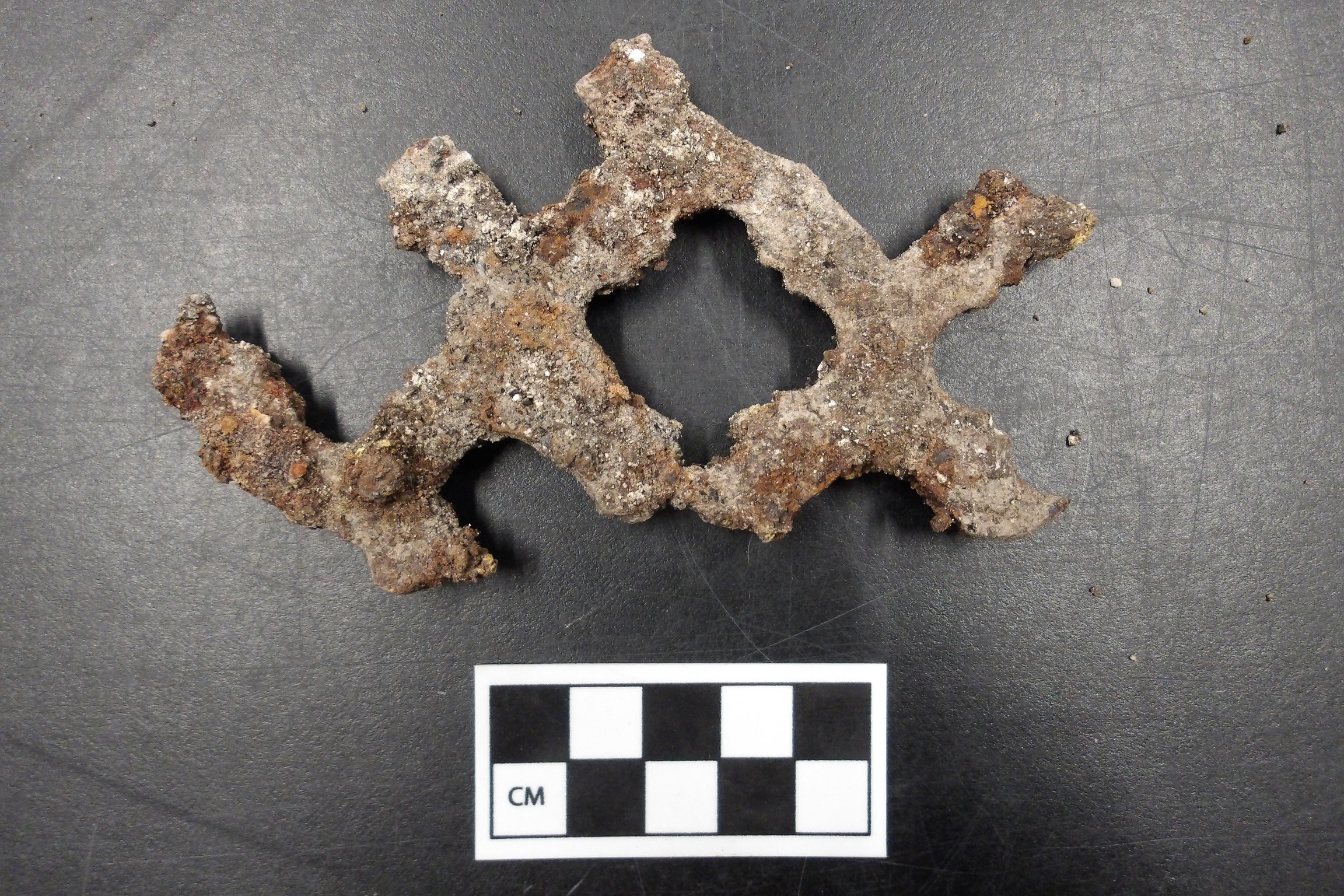
Metal hardware in an x pattern next to a ruler for size
Decorative metal hardware from EU-18.

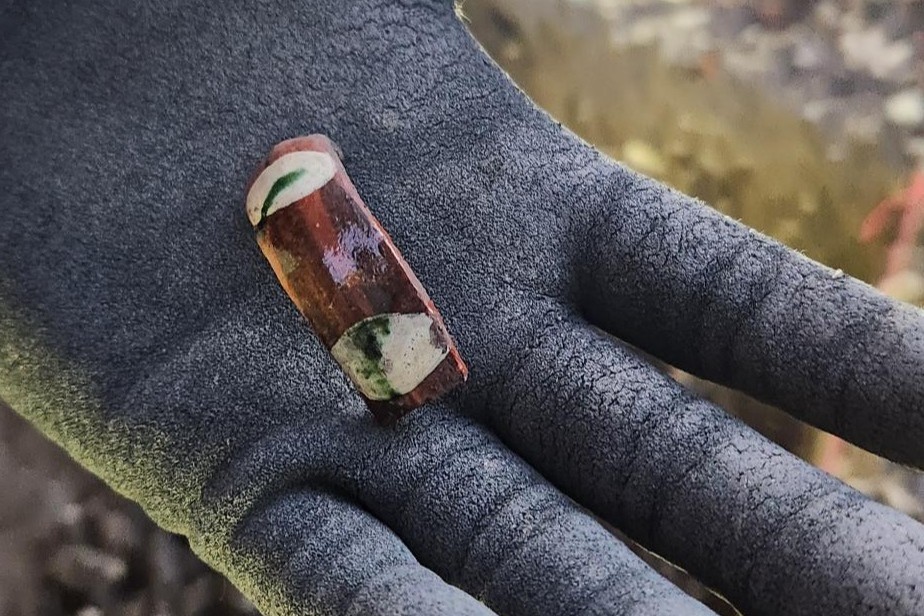
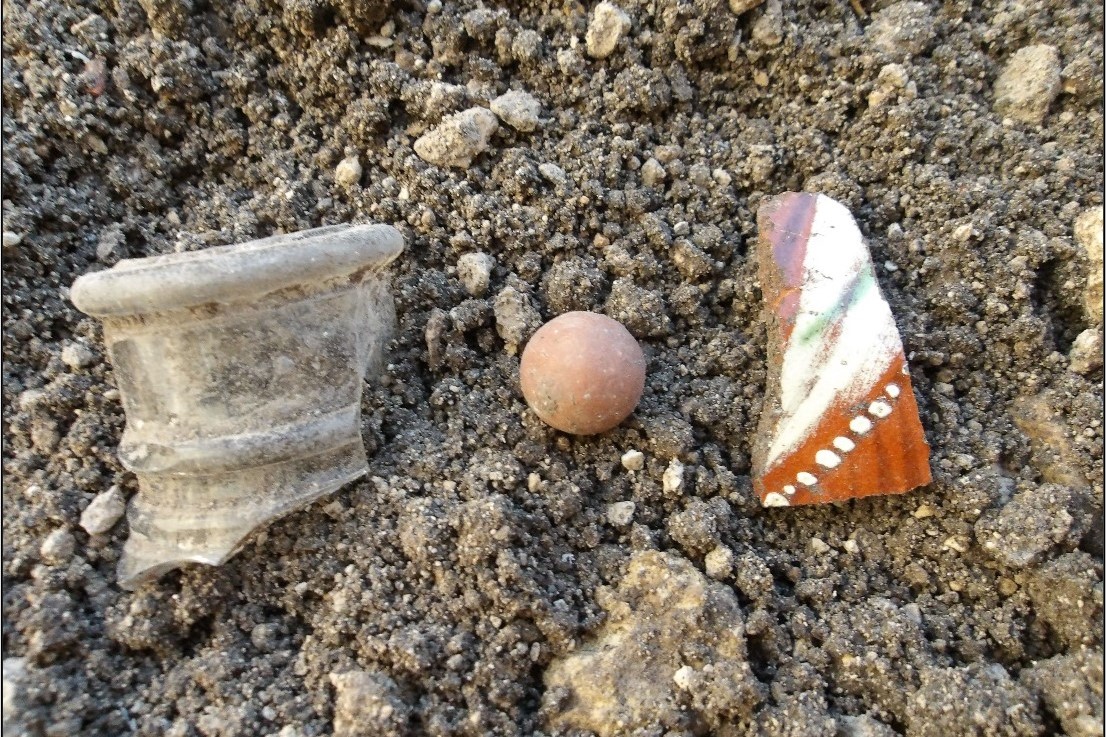
EU-117 was also opened this week. During excavations of EU-117, archaeologists encountered the moisture barrier installed in the 1990s. The 1990s excavations installed the Monel plate to prevent the rising damp within the church walls. Artifact density in EU-117 was low; however, archaeologists encountered two Galera sherds, a clay marble, and a colorless glass bottle neck. Galera is a Spanish Colonial lead-glazed ceramic commonly found at the Alamo site. This type has a wide date range, dating from 1725 to about 1850. Though found at differing elevations, the two Galera sherds are likely from the same vessel.

Three black stones inside the perimeter of an excavation unit
EU-117 at 70 cm below surface, facing east.
Galera handle inside a gloved palm of hand
Galera handle from EU-117.
Glass bottle neck, clay marble, and Galera sherd on a bed of pebbles
Glass bottle neck, clay marble, and Galera sherd from EU-117.

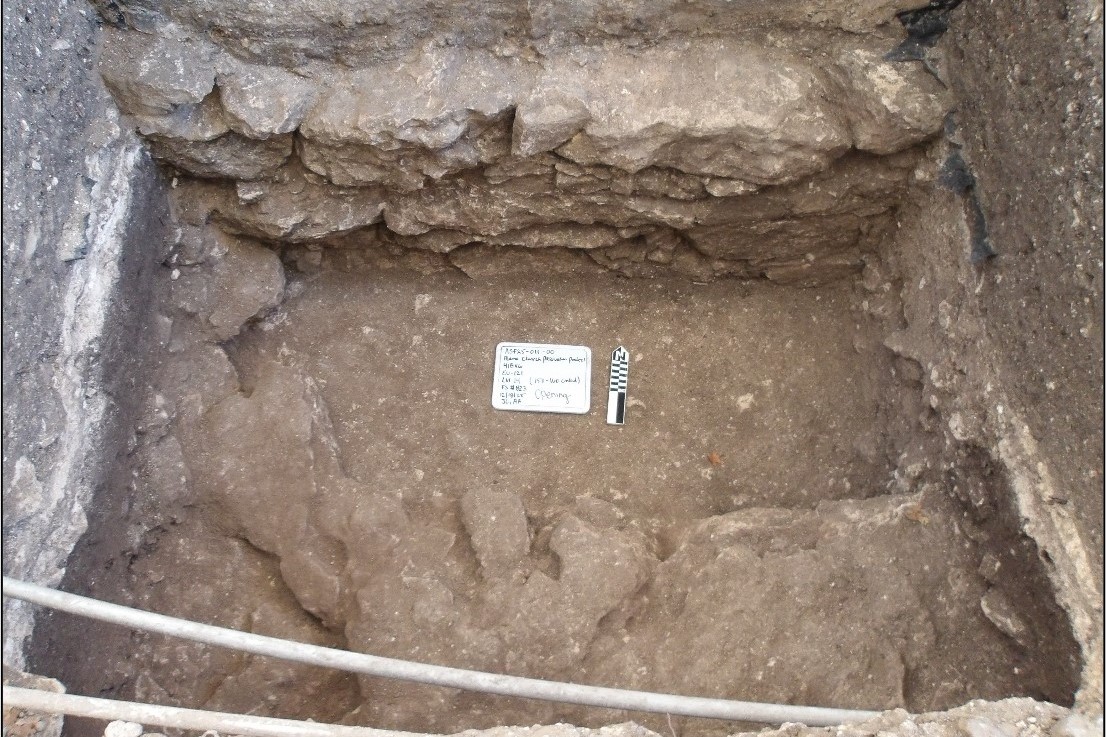
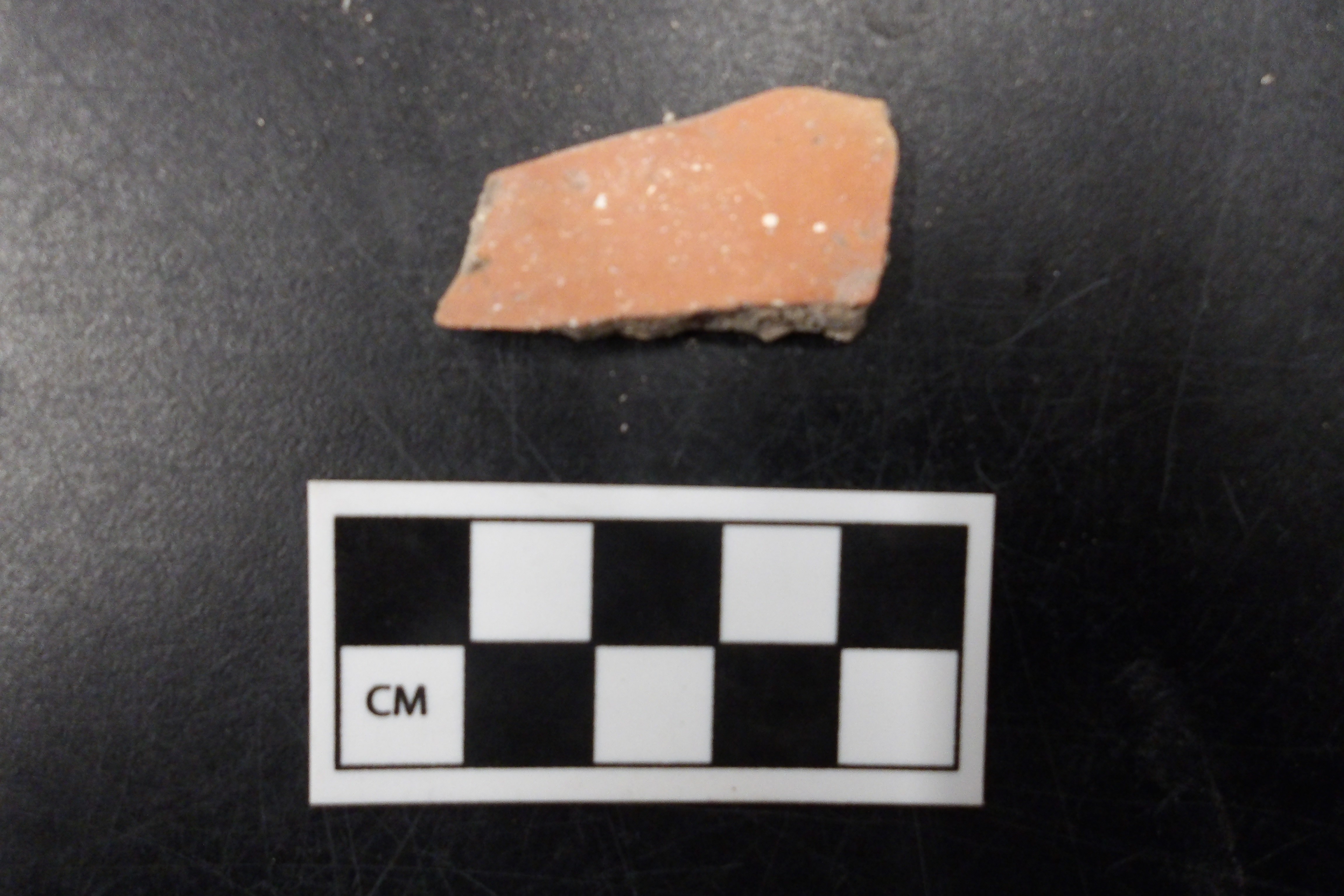
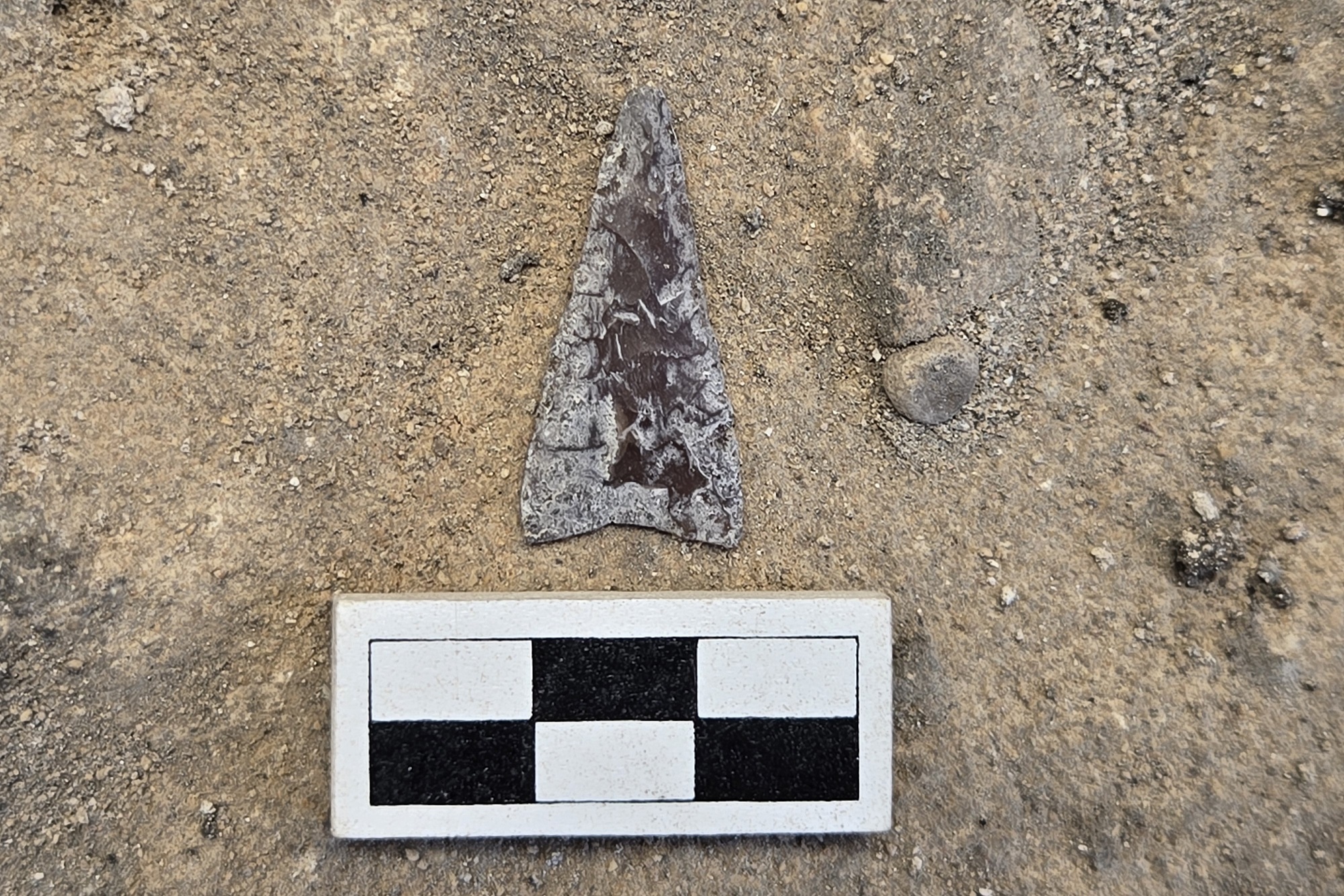
Excavations at EU-121 continue. Like EU-117, EU121 encountered the moisture barrier installed in the 1990 excavations. Notable artifacts from EU-121 include a Guerrero projectile point and Goliad ceramic sherd. The Guerreo point, informally known as a “mission” point, are commonly recovered at the Alamo site and mission sites across Texas. This type of point is likely a continuation of earlier projectile point types identified across Texas. Goliad is an indigenous-made ceramic frequently encountered during archaeological investigations. This type is distinguishable from other Spanish Colonial unglazed ceramic, by the distinct tempering and manufacture style.

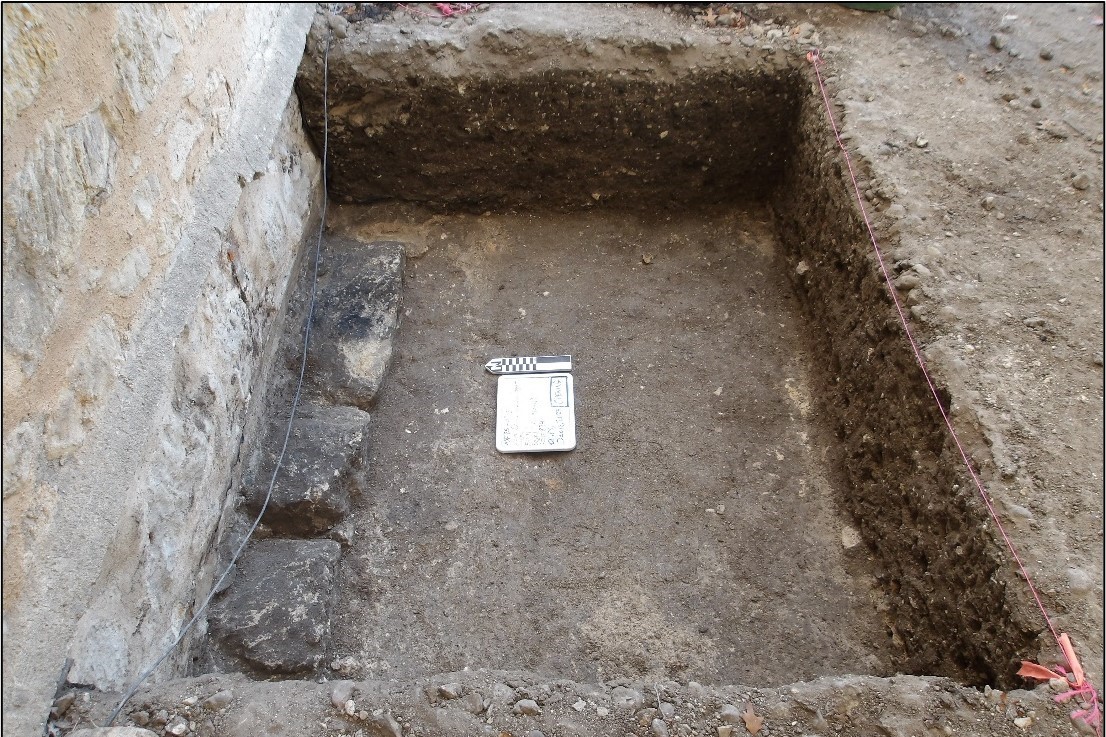
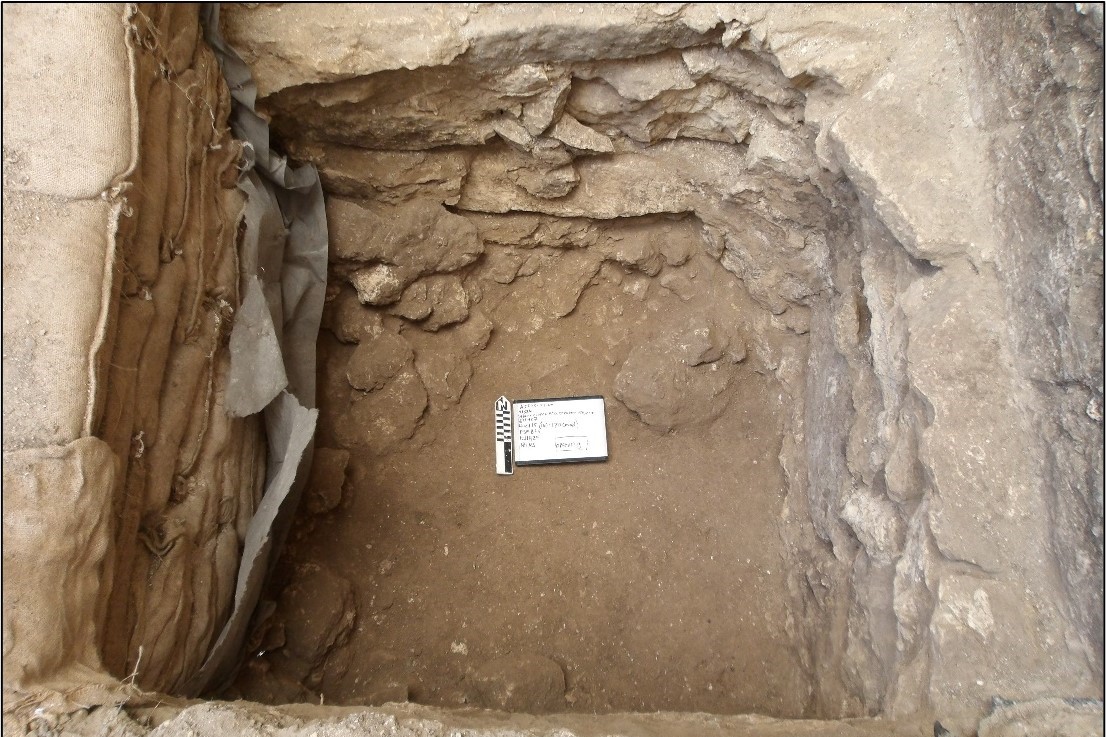
Excavations at EU-127 are complete, with a terminating depth of approximately 150 cm below surface. EU-127 will undergo final unit documentation. This will include detailed maps, photographs, geo points, and soil profiles of the unit.

Two pipes across bottom of excavation unit
EU-121 at 140 cm below surface, facing north.
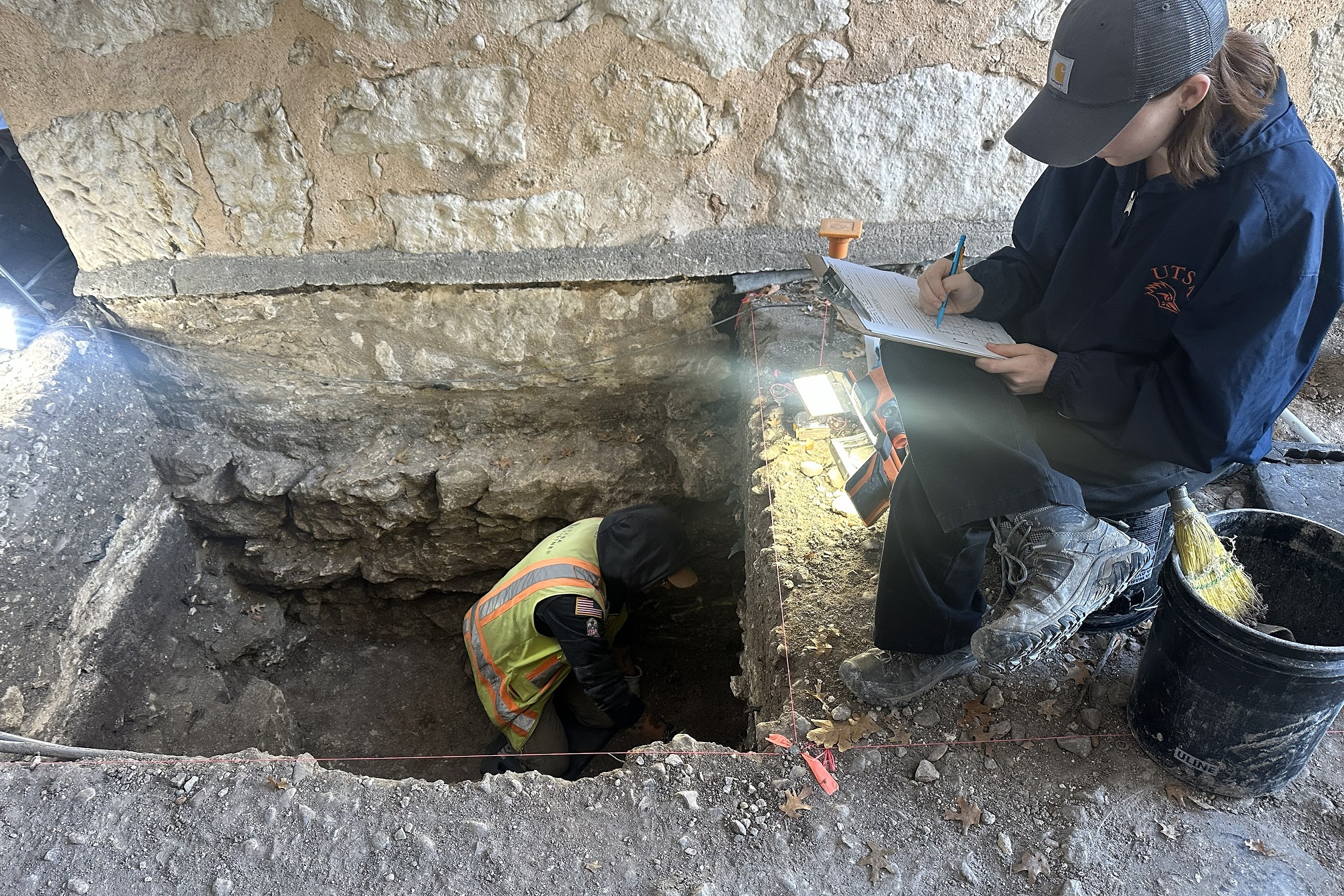
Archaeologist completing paperwork at top of excavation unit
Archaeologists completing paperwork in EU-121.
Goliad sherd next to a ruler for size
Goliad from EU-121.
Excavation unit with several layers of limestone steps
EU-127 at 150 cm below surface, facing north.
Guerrero point next to a ruler for size
Guerrero point from EU-121.
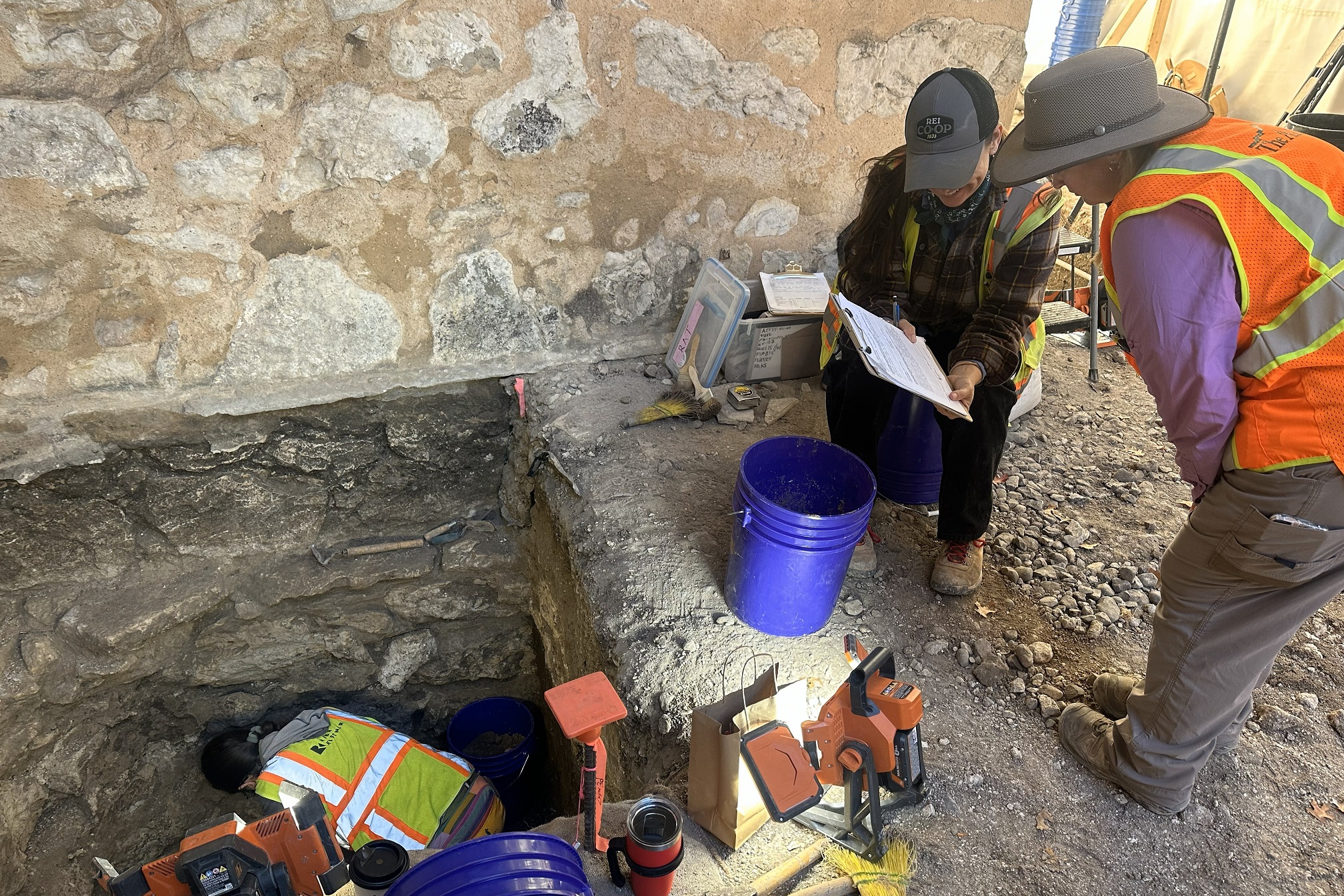
Archaeologist inside an excavation unit and two others at the top comparing notes
Archaeologists consulting with Dr. Tiffany Lindley at EU-127.
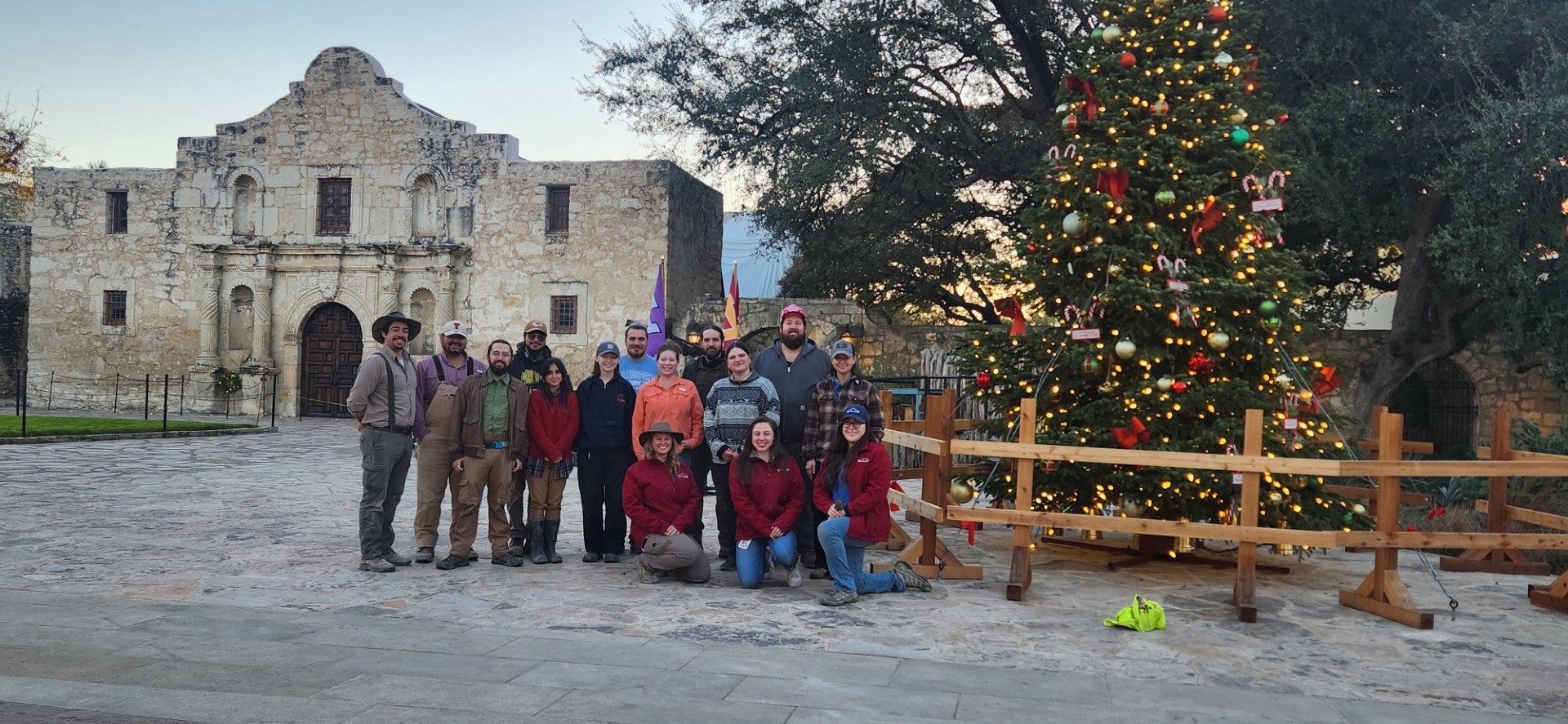
Group of archaeologists standing between Alamo Church and the Christmas tree in the plaza

Happy Holidays from the Alamo archaeology team!