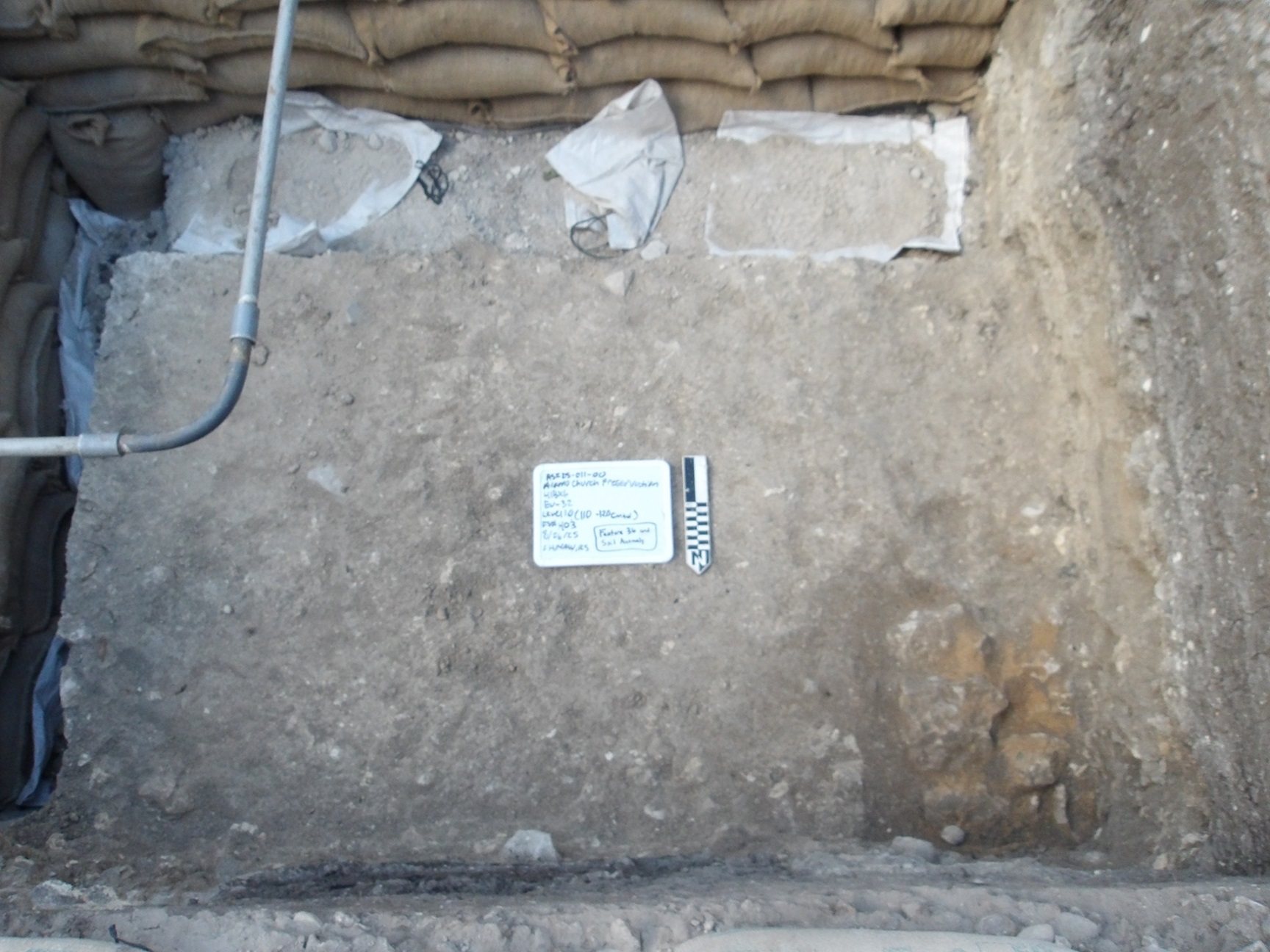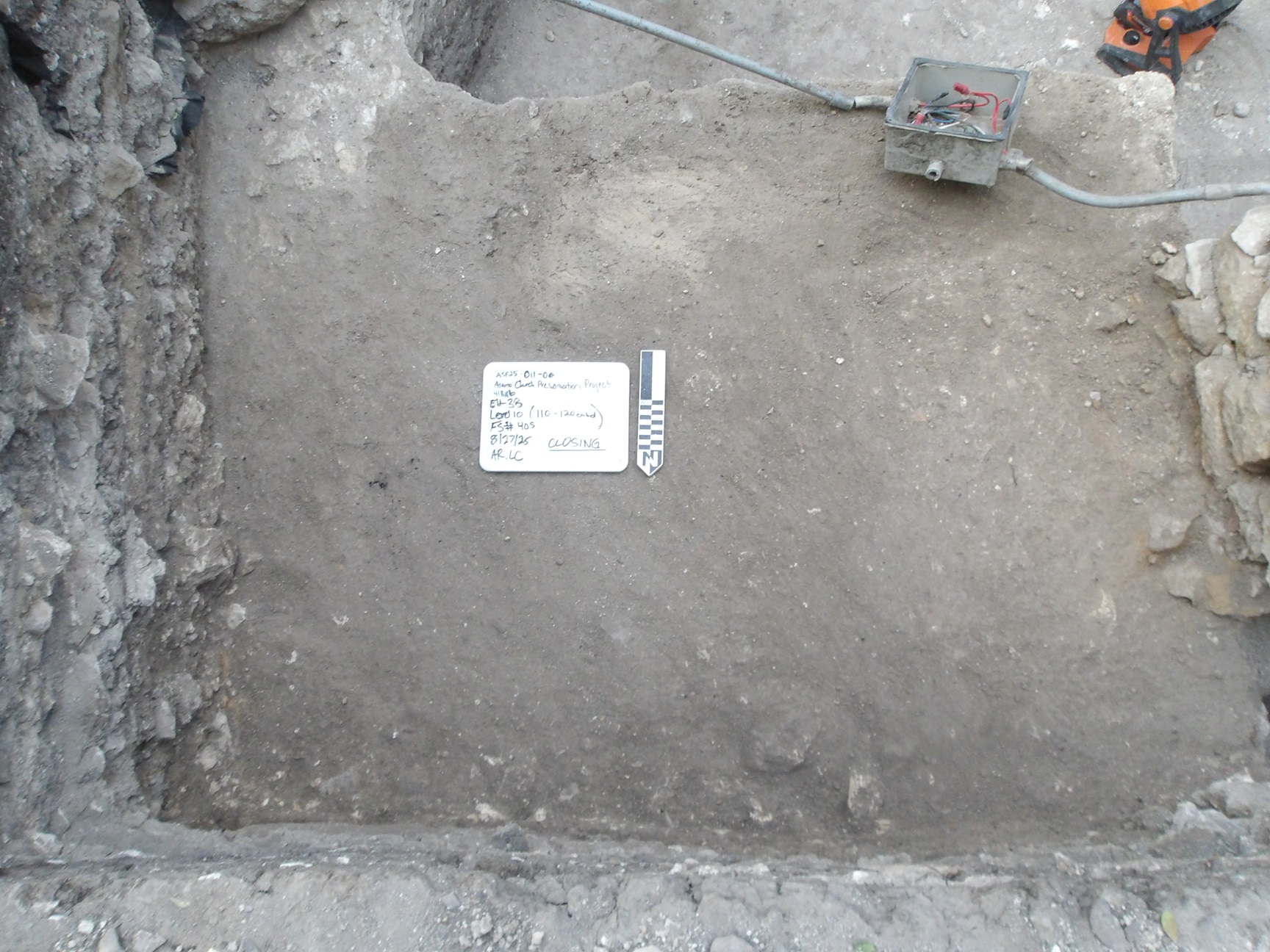
Archaeological investigations continued at the Alamo Church last week. Archaeologists completed excavation in EUs 32 and 38. Two new units—EU-140 and EU-144—were opened on the south side of the Church.
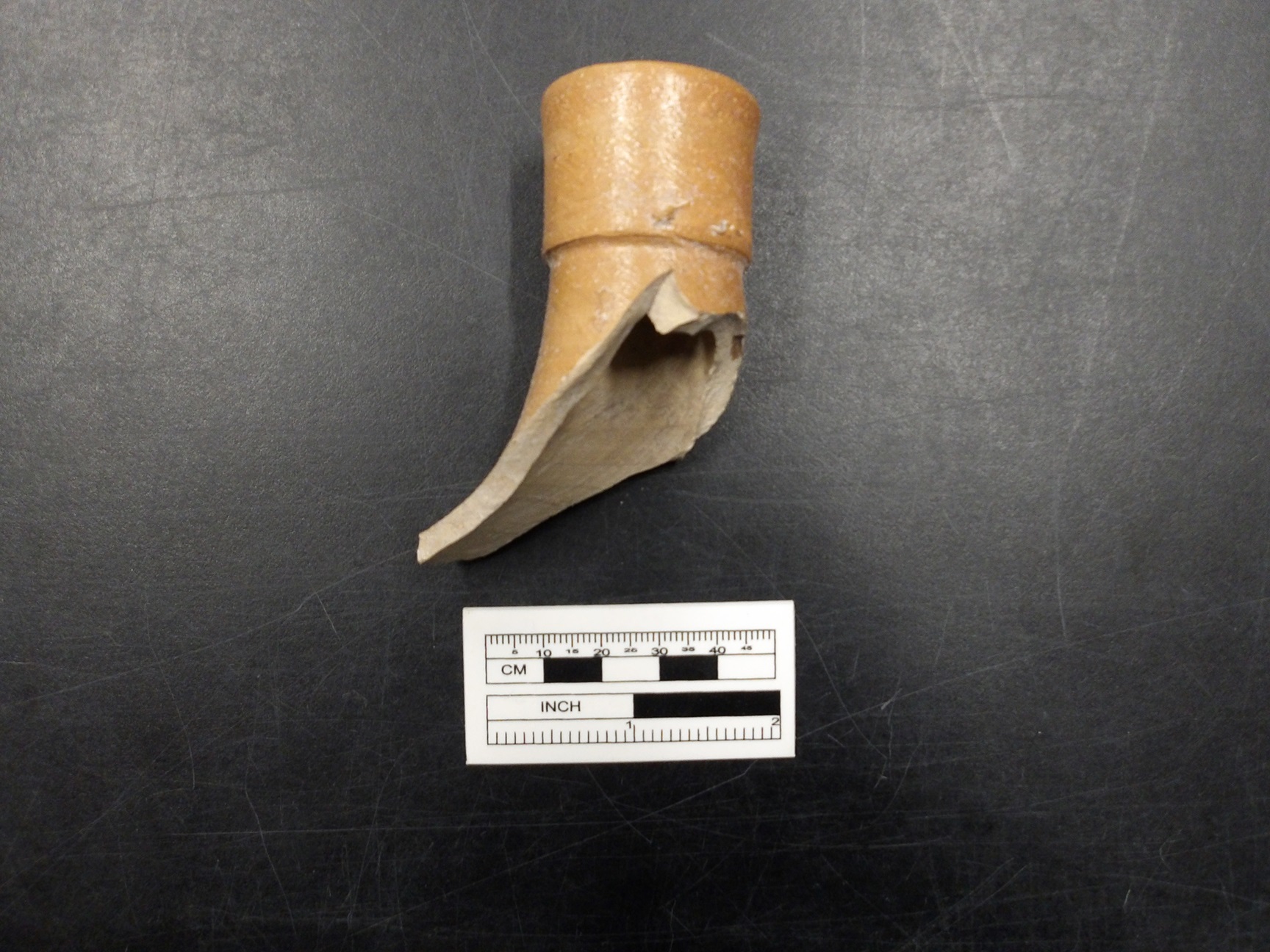
Archaeologists in EU-32 completed excavation and final unit documentation. The terminal depth for this unit was 100 cm below surface. At approximately 90 cm below surface, archaeologists encountered a limestone foundation in the northwestern corner of the unit. The feature consisted of loosely stacked limestone boulders with adhered sandy mortar. While only a small portion of the feature was exposed, it appears to be related to the previous column foundations encountered in two other units. These column foundations are from the late 1800s. One diagnostic artifact was found associated with the feature – the top portion of a stoneware bottle. The stoneware bottle portion is salt-glazed with a brown slip. This type of stoneware has a wide date range, dating from the late eighteenth century into the late nineteenth century. Other artifacts recovered from EU-32 include complete amber glass bottles, nails, and ceramic.